
1970s rock really needs no introduction, and it sure as hell can’t be summarized by one. Continuing the creative explosion of the late 60s, rock continued to evolve, break off into sub-genres (including a proliferation of glam rock and funk), and expand on the sub-genres that already existed—including folk rock, progressive rock, psychedelic rock, and blues. The decade would see the rise of disco and end with punk rock as the new craze.
Groups like The Beatles, Simon and Garfunkel, and The Doors began the 70s with their final albums. Meanwhile, a number of bands that began in the 60s would reach the pinnacle of their abilities in this new decade, including Pink Floyd, Jethro Tull, and Led Zeppelin. There were also lots of new artists who released their first albums in this decade, including Queen, Heart, Aerosmith, Boston, Kansas, Bill Withers, Labi Siffre, Lynyrd Skynyrd, and many more. We’re going to generalize here, clumping the above bands and similar ones together under the umbrella of “classic rock” (while excluding punk rock). That’s a wide net, which makes figuring out the “best” songs of the era pretty much impossible. Determining the best song of every year makes it a little easier, but it’s still too challenging to do so confidently. Let’s try it anyway, though, while also taking time to list some honorable mentions of each year to demonstrate how comparing such different songs can be so difficult. In the end, even readers who (strongly) disagree with this list should at least be able to acknowledge that the following songs are emblematic of a greater, eclectic whole.
10
“Layla” (1970)
Derek and the Dominos
1970 kicked the decade off in style, with Led Zeppelin’s third album showing they can give both electric and acoustic material the same amount of nuance and intensity, Black Sabbath’s first album marking the beginning of a dark new age, The Beatles’ final album waving goodbye to an era, Morrison Hotel proving a return to form for The Doors, George Harrison’s solo debut setting a high standard for his former bandmates, and Santana‘s Abraxas taking the guitar to a higher plane of artistry.
But arguably the greatest song of all would be the one song on Derek and The Domino‘s only album that’s actually worth listening to: “Layla.” This epic starts off with one of the most intense and memorable riffs ever made, and the first few minutes are a fast-paced thrill; Eric Clapton screaming his lungs out, and the slide guitar goes nuts. Famously, “Layla” takes a hard turn half-way through, replacing the aggressive tone with a sad, piano-driven jam that can bring a tear to listeners’ eyes to this day. Both parts are masterfully done, and you can’t really beat it.
9
“Heart of the Sunrise” (1971)
Yes
1971 had such a ridiculous amount of terrific music that it’s practically absurd to even keep track of it all. We have America‘s “Horse with No Name,” The Doors’ dynamic final album, Jethro Tull’s “Aqualung,” Elton John’s “Tiny Dancer,” Pink Floyd’s “Echoes,” and so much more. The most obvious choices are The Who‘s “Baba O’Riley” and Zeppelin’s “Stairway to Heaven,” which are both so valid that choosing anything else might raise eyebrows.
But let’s be unconventional anyway. Yes came out with Fragile that year, which ends with the 11-minute long epic “Heart of the Sunrise.” Whereas “Stairway” evolves from section to section, “Heart of the Sunrise” has a more elliptical structure that’s even more progressive, complex, and utterly transcendental. Robert Plant may be singing up to heaven, but John Anderson sounds like he’s singing from heaven. While “Roundabout” was understandably Fragile‘s single, “Heart of the Sunrise” leaves you in sheer astonishment. Maybe not the first time around, as it’s pretty experimental for those not accustomed to Yes. But for those willing to open their minds and hearts, this song feels like the dawn of a new age.
8
“Thick as a Brick” (1972)
Jethro Tull
1972 was another wonderful year for rock. David Bowie had Ziggy Stardust, Stevie Wonder further cemented his name into music history with the funky “Superstition,” Steely Dan came out with “Do it Again,” Yes created their immortal magnum opus Close to the Edge, and Elton John’s Honky Chateau gave us the likes of “Rocket Man” and “Honky Cat.” But the most significant titan of rock that came out in ’72 would have to be Jethro Tull’s “Thick as a Brick.”
Ian Anderson didn’t agree when critics called Aqualung a concept album, so he responded by giving them the ultimate concept album. Thick as a Brick is a progressive tour de force: it’s just one long track, and boy is it a journey. The love and care that goes into full-blown experiments like this is hard to come by nowadays. Employing Tull’s trademark combination of elaborate acoustic guitar, electric jams, Anderson’s iconic flute, and playfully satirical lyrics, “Thick as a Brick” encapsulates what made Jethro Tull one of the greatest bands of all time.
7
“Funeral for a Friend/Love Lies Bleeding” (1973)
Elton John
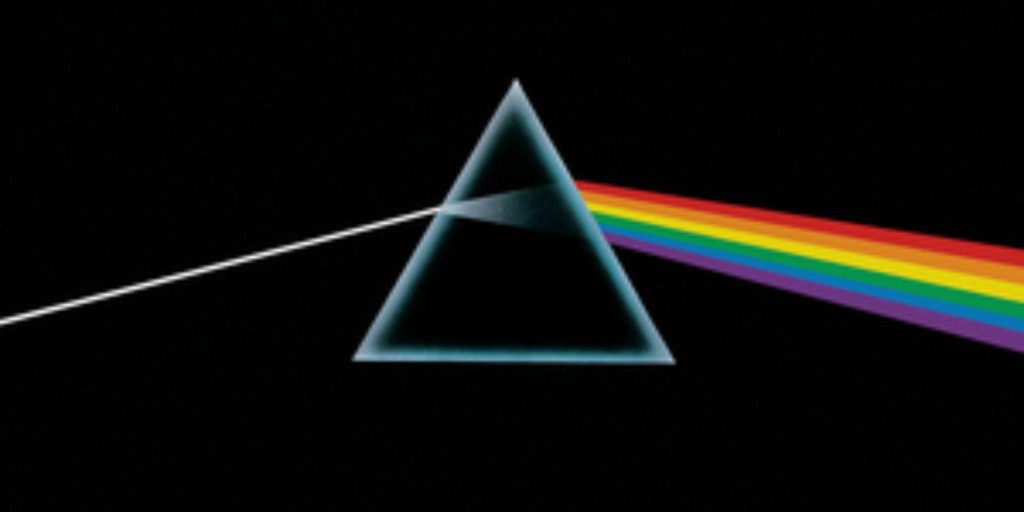
1973 was another year with so much top-tier music that it doesn’t feel right to only choose one song above all the others. Zeppelin had “No Quarter” and “Over the Hills and Far Away,” Bowie released Aladdin Sane, Bob Marley had two astounding albums, Paul McCartney and Wings‘ Band on the Run is cover-to-cover brilliance, and both Queen and Aerosmith released impressive debut albums. Then of course there’s The Dark Side of the Moon and Lynyrd Skynyrd‘s classic debut record, which means something like “Time” or “Free Bird” should be number one here.
But we have to go with the opening track to Elton John‘s Goodbye Yellow Brick Road: “Funeral for a Friend/Love Lies Bleeding.” The emotional range of this song is wide and wondrous, sweeping the listener away on an adventure that shifts from dark, overwhelming synthesizer into a bright, piano-driven rocker. It’s always a marvel to hear this very slow elegy turn into a sprinting love song, making it not just a standout track for ’73 but also Elton John’s magnum opus.
6
“Seasons of Wither” (1974)
Aerosmith
1974 was a year that saw Queen picking up steam with two more very good albums, Elton John finding another beautiful ballad in “Don’t Let the Sun Go Down on Me,” and more. The fact that this is one of the decade’s weaker years for rock is a testament to the 70s’ overall strength.
This may be a little obscure, but 1974’s best song is arguably “Seasons of Wither.” Hailing from Aerosmith’s second album Get Your Wings, this delicate track begins with the sound of a live audience—paired with the gradual appearance of an acoustic guitar. It leads into one of Aerosmith’s most successful ballads, one that rivals the more well-known “Dream On” in both emotional force and production value. The band’s rendition of “Train Kept a Rollin'” is also amazing, but “Seasons of Wither” feels more like a surprise—a refreshingly sincere turn inward that moves the listener every time they hear it.
5
“Shine on You Crazy Diamond” (1975)
Pink Floyd
1975 was one of the decade’s strongest years in movies, and the same goes for its music. Zeppelin came out with “Kashmir” and “In My Time of Dying,” Queen took the world by storm with “Bohemian Rhapsody,” Aerosmith came out with “Walk This Way” and “Sweet Emotion,” Minstrel in the Gallery was Jethro Tull’s final masterpiece, Ted Nugent had “Strangehold,” Heart released Dreamboat Annie, Fleetwood Mac gave us songs like “Rhiannon,” and Wings’ underrated Venus and Mars rivals its predecessor.
One could go on, but it’s difficult to argue that any of this music can surpass the emotional power of Wish You Were Here‘s “Shine on You Crazy Diamond.” This spacey, bluesy ballad about former member Syd Barrett‘s mental collapse is easily one of largest highlights of rock history. It is a bold and achingly beautiful choice to have two lengthy halves of this giant bookend the album, immersing fans in a disorienting yet poignant atmosphere that’s impossible to shake off.
4
“Hotel California” (1976)
Eagles
1976 wasn’t quite as good as the previous year, but it still had so much material. Queen followed their previous year’s hit with A Day at the Races, Aerosmith’s Rocks saw the band as strong as ever with songs like “Back in the Saddle” and “Combination,” Rush had their beloved epic 2112, Frampton Comes Alive! announced itself as one of the greatest live albums ever made, and Billy Joel’s Turnstiles had classics including “New York State of Mind” and “Angry Young Man”.
But the song that beats them all was Eagles‘ “Hotel California.” Choosing that 12-string guitar is a stroke of genius, as its essential to capturing the essence of those intricate picking patterns and sustaining the track’s odd yet compelling mood. When that reggae-influenced rhythm guitar arrives, it fits in perfectly with the song’s overall relaxed yet ominous aesthetic. Along with the iconic solo at the end, “Hotel California” represents the epitome of the Eagles’ sound.
3
“The Chain” (1977)
Fleetwood Mac
1977 was another memorable year. Pink Floyd came out with their underappreciated Animals, Bob Marley released Exodus, Meatloaf had Bat out of Hell, Queen had two enormous hits from News of the World, and Heart came out with the classic “Barracuda.” But if there’s one album that stands out the most, it’s probably Fleetwood Mac’s Rumours—and the strongest track on that album is arguably “The Chain.”
The bass drum and the acoustic guitar in “The Chain” are so iconic that it’s hard to mistake them for anything else. It’s one of the best intros in rock, and the way everyone sings together, almost out of nowhere, feels like a nice change of pace for the verse. Lindsey Buckingham and Stevie Nicks make the chorus every bit as strong as the verse, but what makes this song rise above the rest would be the breakdown in its final act.
2
“Ain’t Talkin’ Bout Love” (1978)
Van Halen
1978 saw a decline in the world of rock, but that doesn’t mean there weren’t some bands still making great music. Heart had “Straight On” this year, The Doobie Brothers came out with their classic Minute by Minute, Billy Joel had 52nd Street, and bands like The Police and Van Halen released their debut albums—which is where we find out next pick.
Van Halen’s eponymous first album has a lot of great stuff, but “Ain’t Talkin’ Bout Love” especially feels like such a refreshing jolt of electricity. That riff is so good that its echoing roar commands the opening seconds of this track, almost as if the rest of the band has to behold what they’re about to play with before joining in. David Lee Roth‘s vocals give us the impression of a frontman who’s ready to take the world by storm. “Ain’t Talkin’ Bout Love” declares a ferocious new sound that would echo into the 80s and keep rock (barely) alive.
1
“Comfortably Numb” (1979)
Pink Floyd
In this writer’s opinion, there isn’t nearly as much exciting rock in 1979 as there was in the decade’s earlier years. We’ve got moments of creativity, such as ACDC‘s “Highway to Hell” and Supertramp‘s “Breakfast in America”—but let’s just get to The Wall, shall we? Pink Floyd already has a place on this list, but their 1979 hit is so powerful and complex in such an underwhelming musical year that there’s basically no other rock album that competes with it.
“Comfortably Numb” is The Wall’s greatest achievement. The vocal switch sees Roger Waters singing as a band manager in the verse and David Gilmour singing as the protagonist’s inner voice in the chorus. This is brilliant, as Waters’ voice is better suited for the verse’s satirical tone and Gilmour’s better suited for the emotionally tender chorus. Likewise, the first guitar solo stands in stark contrast to the second: a gorgeously rough outtro that serves as an excellent representation of Pink’s terribly damaged mental state. Without even getting to the lyrics, “Comfortably Numb” was one of classic rock’s final gasps at the end of a truly singular decade.



Comments
Advertisement