
The Harry Potter series is widely considered one of the most groundbreaking and revolutionary of all time. Upon its debut in the 1990s, it exploded in popularity, attracting millions upon millions of fans and even spawning a multi-billion-dollar franchise. The books grew to develop an expanded universe, an upcoming TV adaptation, loads of official merchandise, and even a theme park at Universal Studios in Orlando. Needless to say, it became quite the cultural phenomenon.
The series fits into a subgenre of fantasy called “low fantasy,” which basically means that aspects of magic or monsters intersect with real life, and that the story is set on Earth, albeit in a version where the impossible and fantastical come to life. While the books and movies and pretty much everything else that came with them are super popular, they’re not necessarily the best per se. In fact, plenty of other low fantasy books do things better than Potter.
‘Jonathan Strange & Mr. Norrell’ (2004)

Suzanna Clarke‘s debut novel, Jonathan Strange & Mr. Norrell is a historical fantasy set at the turn of the 19th Century, during the onset of the Napoleonic Wars. In an alternate version of England, magic is a well-known practice that is one hundred percent genuine. The magical arts are an actual science, and not some farce involving misdirection, illusions, or seemingly impossible escapes — it’s the real deal. Despite the fact that magic’s existence is common knowledge, it is still looked down upon and treated as a social taboo.
The two titular characters, Jonathan Strange and Mr. Norrell, are two magic users who spend most of their time running experiments on the art. One treats magic as a form of trial-and-error, believing no worthwhile discovery comes without risk, while the other is more cautious and treats magic analytically, involving calculations and exact measurements. This is such an interesting book because of how it handles magic. Unlike Harry Potter, magic isn’t some super secret hidden world — it’s just a part of life.
‘Between Two Fires’ (2012)

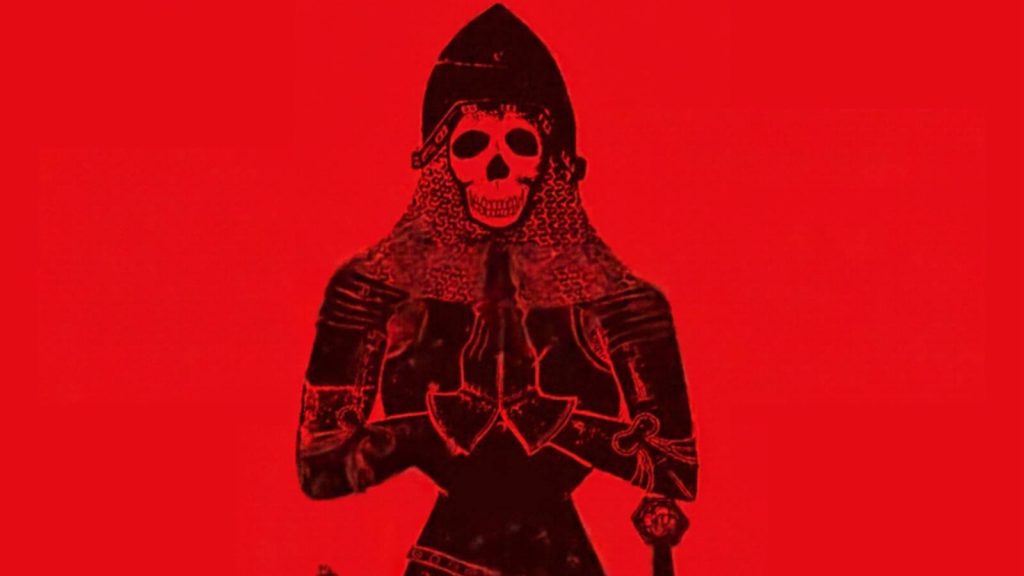
Between Two Fires is set in the Middle Ages, more specifically during the Hundred Years’ War between England and France. A contingent of French knights is travelling across the countryside when they come across a young girl all by herself. While some of the knights intend to commit unspeakable atrocities against her strictly for their own benefit, one of them goes against the others. He slays them and saves her, swearing to uphold his chivalric duty and see her to safety. The problem is, this is no ordinary war-torn landscape: there is a war raging between Heaven and Hell too, and demons prowl the wilds of France. Worse still, the Bubonic Plague is sweeping across Europe; a side effect of the divine conflict.
Between Two Fires is a really dark story that teeters on the border of fantasy and horror and illustrates an extremely bleak world. Despite the fact that the book contains literal demons, it’s actually a much more realistic look at Medieval times, shattering any images of romanticism and showing audiences how horrible it actually was to live during the period. Between Two Fires is a brutal, violent, yet deeply fascinating foray into history with monsters sprinkled into it.
‘Charlie and the Chocolate Factory’ (1964)

Roald Dahl‘s Charlie and the Chocolate Factory is one of the most legendary children’s novels out there and has received several movie adaptations. As many already know, the tale follows a poor young boy named Charlie, who wins one of five golden tickets to tour Willy Wonka’s chocolate factory. It’s far from an industrial wasteland, though — contained within are magical environments, small humanoids called Oompa-Loompas, and rooms that apparently defy all laws of physics. Willy Wonka himself is a tad eccentric, to put it mildly, but he is a fascinating character with a lot of mystery surrounding him.
Sure, the book is written for kids, but it’s one that adults occasionally return to as a bit of nostalgia. It lets the kid in everyone run free in imagining rooms made entirely of candy and reality-bending scientific experiments. Charlie and the Chocolate Factory isn’t just adventurous — it’s an important morality tale for children, one that emphasizes the importance of being selfless, kind, and grateful, attributes that can take one far in life.
‘Pilgrim: A Medieval Horror’ (2023)

Pilgrim is a highly underrated fantasy/horror novel set in the Crusades. During a conquest of the Holy Land, a Teutonic Templar is preparing to come home after seven years at war. However, his progress is hindered by the fact that demons and djinn are real and begin assailing him and his companions as they seek to find peace.
Pilgrim includes elements and beings from multiple cultures and mythologies, most prominently from Christian, Jewish, and Islamic texts for inspiration. On the surface, it seems like a story about knights and castles and war, but the demons add a whole new layer to things that makes it a lot more unsettling. Although hardly anyone has actually experienced it, this standalone novel is perfect for history buffs, or for people who like fantasy that involves religious beings like angels and demons.
‘Miss Peregrine’s Home for Peculiar Children’ (2011)

Miss Peregrine’s Home for Peculiar Children is the first in a series that blew up in the literary world, even spawning a so-so film adaptation. The main plot point of the story is the eponymous home, which is run by the enigmatic Miss Peregrine. The home, which acts as a foster home or orphanage, is specifically for children who have some sort of supernatural innate gift without really knowing what causes it. For example, one is invisible, one can hover above the ground, and another can reanimate dead bodies.
The plot, of course, goes beyond that, involving a conspiracy against a teenage boy’s grandfather, who formerly lived at the home, and the boy’s quest to find answers. A lot of beats are similar to the Harry Potter series, but this one does it way better due to the fact that there are far fewer plot holes. While it might not be as groundbreaking, Miss Peregrine’s Home for Peculiar Children is certainly popular and a thrilling ride from start to finish.
‘The Princess Bride: S. Morgenstern’s Classic Tale of True Love and High Adventure, the “Good Parts” Version’ (1973)

The Princess Bride is famous for its stellar 1987 movie adaptation, but the book is quite different. See, it includes a lot of passages about the narrator’s process of actually writing it, adding a significant layer of metatextual commentary. The movie couldn’t really frame the story to be as meta as the book, so they opted to frame it as a grandfather telling the story to his sick grandson. In any event, the actual story itself is mostly the same: Princess Buttercup is betrothed to Prince Humperdinck, whom she despises. Instead, she falls for a stablehand named Westley, who becomes lost at sea. Years later, Buttercup and Westley reunite, and intend to free her from the oppressive clutches of her fiancé.
The novel was written to be a satirical take on classic fairytales, so you can expect a lot of punchlines, situational irony, and absurdist moments, but that’s precisely what makes it so brilliant. Despite taking place in the fictional realm of Florin, the story mentions places like Sicily and Australia, so it’s implied to still be part of the real world. In any event, The Princess Bride is hilarious, witty, and brilliant pretty much all around.



Comments
Advertisement