
1974 was a cultural pivot point. The optimism of earlier decades had burned away in the wake of Vietnam and Watergate, leaving a cinematic landscape defined by distrust and rebellion.
Alongside the expected blockbusters and genre movies, many filmmakers pushed boundaries, and audiences embraced moral ambiguity. The result? A year of complex movies that left a lasting imprint on the medium.
10
‘Lenny’ (1974)

“Life’s not obscene. It’s honest.” Nowadays, many comedians are looked to for insight and cultural commentary, but back in 1974, that was not the case. Lenny was one of the earliest movies to engage seriously with a comedian as a cultural voice. Dustin Hoffman delivers one of his most ferocious performances as Lenny Bruce, the boundary-breaking stand-up whose comedy was equal parts truth-telling and self-destruction. Shot in grainy black-and-white by Bob Fosse, the film feels like a documentary eulogy, a smoky, jazz-inflected descent into the cost of saying the unsayable.
Indeed, Bruce paid a price for his jokes, including jail time. Much worse than canceled shows or social media flak. Yet the movie rises above the average biopic because it refuses to romanticize Bruce’s rebellion. It shows brilliance and addiction intertwined, ego and fragility permanently wrestling. In an age where comedy is debated as culture war territory, Lenny remains startlingly relevant.
9
‘The Taking of Pelham One Two Three’ (1974)

“We’re trying to run a city here!” Long before the shaky remake, the original Taking of Pelham One Two Three pushed the thriller to new heights. Walter Matthau is wonderfully weary as a transit cop forced to negotiate with hijackers who take a NYC subway hostage. Robert Shaw, icy and disciplined, provides the perfect counterpoint. Building off this similar, strong premise, the movie delivers muscular urban suspense with sardonic humor and unusual realism.
The film succeeds not only as a thriller, but as a portrait of a city: grimy, chaotic, alive, and held together by people who simply grit their teeth and endure. Its ending lands with understated perfection, proof that suspense doesn’t always need spectacle, just sharp writing and impeccable pacing. Today, it stands as one of the definitive New York crime films, beloved by directors from Tarantino (Reservoir Dogs borrowed its color codenames) to Tony Scott to Sean Baker.
8
‘Ali: Fear Eats the Soul’ (1974)

“Because I’m so happy on the one hand, and on the other I can’t bear it anymore.” Rainer Werner Fassbinder’s Ali: Fear Eats the Soul is a love story forged against prejudice and loneliness. Brigitte Mira plays Emmi, an older German widow. Opposite her, El Hedi ben Salem is Ali, a younger Moroccan immigrant. Their romance, simple and sincere, becomes radical in a society eager to sneer, isolate, and punish difference. Every glance and hesitation reveals a lot about the society they live in.
The film is intimate, minimalist, and emotionally surgical. Fassbinder strips away cinematic ornamentation to expose vulnerability in its rawest form. Still, there is also warmth to be found here, and humor, and moments of gentleness that feel almost sacred. Watching it now, the film feels prophetic. Its themes of xenophobia, ageism, and dignity resonate with painful clarity. Lightyears ahead of its time.
7
‘Blazing Saddles’ (1974)

“Excuse me while I whip this out.” Few films test the boundaries of comedy like Blazing Saddles, and even fewer survive the decades with their audacity intact. Mel Brooks detonates the Western genre and American racial hypocrisy with equal delight, creating a satire both chaotic and razor-sharp. We get kooky anachronisms, fourth wall breaks, and people punching horses out cold. The wackiness is carried by the charismatic stars. Cleavon Little and Gene Wilder play off each other with deadpan brilliance, grounding the absurdity in genuine charm.
In other words, Brooks skewers racism not with politeness or subtlety but with explosive ridicule. The film’s meta-breakdown finale, cowboys brawling through movie sets, still feels wildly inventive, a Looney Tunes descent into pure cinematic anarchy. In a culture where comedy often plays it safe, Blazing Saddles remains a reminder that satire can be fearless, messy, and a ton of fun.
6
‘Young Frankenstein’ (1974)

“It’s pronounced Fronkensteen!” Mel Brooks delivered not one but two bangers that year. If Blazing Saddles is the director at his most anarchic, Young Frankenstein is him at his most affectionate. Gene Wilder’s performance is a masterpiece of manic sincerity, honoring the Universal horror legacy while gleefully poking it in the ribs. Shot in lush black-and-white, the film feels like a lost classic even as it delivers some of the funniest scenes of that era: “Puttin’ on the Ritz,” the shifting hump, the candle-lit secret passage.
What makes the movie stand out is its tone: loving parody, not mockery, along with comic timing so pristine it feels musical. (Marty Feldman’s Igor remains one of cinema’s great comedic creations.) The film never sneers at its inspirations; it embraces them, then joyfully collapses into silliness. It’s homage done right, with intelligence, wit, and heart.
5
‘A Woman Under the Influence’ (1974)

“I’m trying to be good.” A Woman Under the Influence is a volcanic portrait of emotional vulnerability and domestic confinement. At the heart of it is Gena Rowlands, delivering a performance so raw and frightening in its emotional nakedness that it feels less acted than lived. It’s one of the very best of the 1970s. Peter Falk, playing her husband, matches her with equal intensity, revealing masculinity that oscillates between tenderness and tyrannical panic.
This is John Cassavetes at his very best as a director (even if some would complain that he’s a little long-winded). He refuses to cut away when things get raw or awkward or uncomfortably intimate; instead, he stays in those long, punishing scenes. The movie is simultaneously clear-eyed and radically empathetic. It refuses to simplify mental struggle, marriage, or the messy ways humans hurt and help each other. Difficult, human, unforgettable, it’s a film that leaves viewers shaken.
4
‘The Texas Chain Saw Massacre’ (1974)

“You don’t need to worry about anything.” A low-budget nightmare that birthed a genre and still feels like a documentary from hell. Though the title implies a gorefest, what really makes Texas Chain Saw Massacre a classic isn’t the brutality but the atmosphere, dread, and dusty realism. Tobe Hooper immerses in a world of sun-baked rural decay, grotesque family dynamics, and violence that feels horrifyingly possible. The genius of the film lies in what it doesn’t show. Psychological terror and weaponized sound design do far more damage than gore ever could.
The dinner-table chaos is a descent into madness that never loses its edge, no matter how many imitators followed. So many slasher ideas originated here: the hulking masked killer, the use of power tools as murder weapons, and of course, the final girl. Rewatching Texas Chain Saw today remains punishing, exhilarating, and grimly mesmerizing.
3
‘The Conversation’ (1974)

“He’d kill us if he got the chance.” With The Conversation, Francis Ford Coppola, fresh off The Godfather, turned inward, crafting a psychological thriller defined by guilt, claustrophobia, and the cold hum of surveillance tech. Gene Hackman turns in one of his finest performances here as Harry Caul, a private surveillance expert unraveling under the weight of his profession and conscience. The tension of his story comes not from explosions, but from tape hiss, silence, and doubt spiraling into obsession.
This is cinema as slow-burn paranoia, a nail-biter jam-packed with food for thought. A masterpiece of editing and sound design, The Conversation examines privacy, morality, and the terrifying consequences of partial knowledge. These themes were topical to an America still reeling from Watergate but watching it today, in an age of digital monitoring and data tracking, its messages arguably hit home even harder.
2
‘Chinatown’ (1974)

“Middle of a drought, and the water commissioner drowns. Only in L.A.” Noir reached its zenith with Chinatown. Jack Nicholson has top billing as private investigator J.J. Gittes, whose swagger melts into helpless horror as he uncovers corruption woven into the bones of Los Angeles. Alongside him, Faye Dunaway adds tragic gravity, crafting a character whose secrets are shield and wound alike. Both characters nail the killer script by Robert Towne, frequently ranked among the greatest ever. It combines rich characterization with inventive narrative structure, without scrimping on the suspense.
The film endures because it refuses comfort. Its twist is shocking and philosophically crushing. Indeed, this is ’70s cinema at its most cynical. The sun-drenched streets feel cursed, the glamorous era rotting beneath its own beauty. “Forget it, Jake. It’s Chinatown.” A line that lingers like bitter smoke. The message is grim: truth loses, power wins.
1
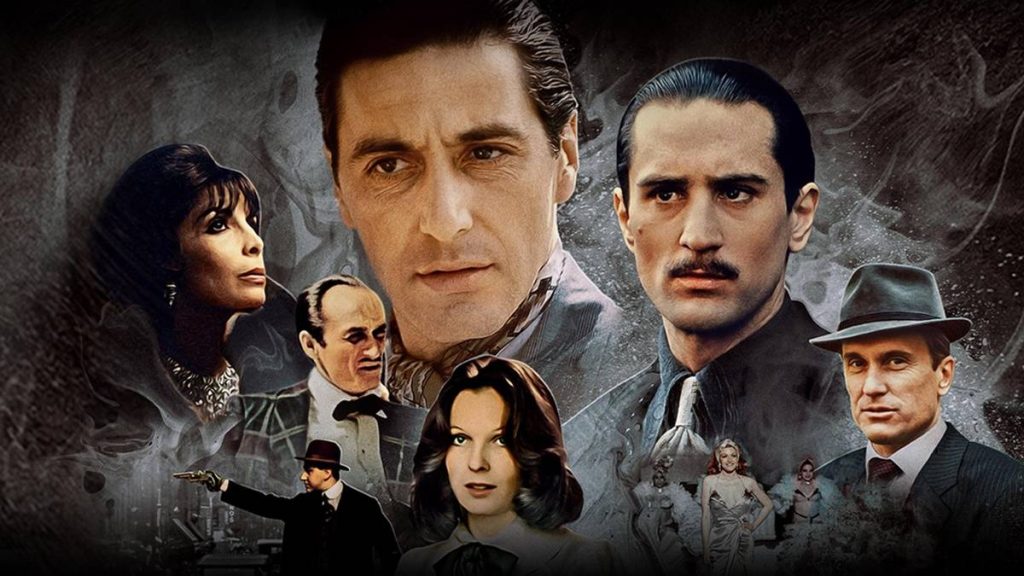
‘The Godfather Part II’ (1974)

“I know it was you.” Coppola was truly on fire in the early ’70s, releasing both The Conversation and The Godfather Part II in the same year. It remains the most debated sequel in film history. Not whether it’s good, but whether it’s better than the original. It’s an epic bifurcated tragedy, pairing Al Pacino’s icy descent into tyranny with Robert De Niro’s tender, steely rise as young Vito Corleone. Pacino gives a performance carved from granite and remorse; De Niro’s is all quiet resolve and emerging power.
Together, their parallel stories engage with all the grand American themes: ambition and loss, legacy and loneliness, violence and sorrow looping through generations. If the first Godfather is about power’s allure, Part II is about its rot. By the devastating final shot, Michael has won everything and lost everything. A masterpiece of operatic tragedy, it remains arguably the greatest crime movie of all time.



Comments
Advertisement