
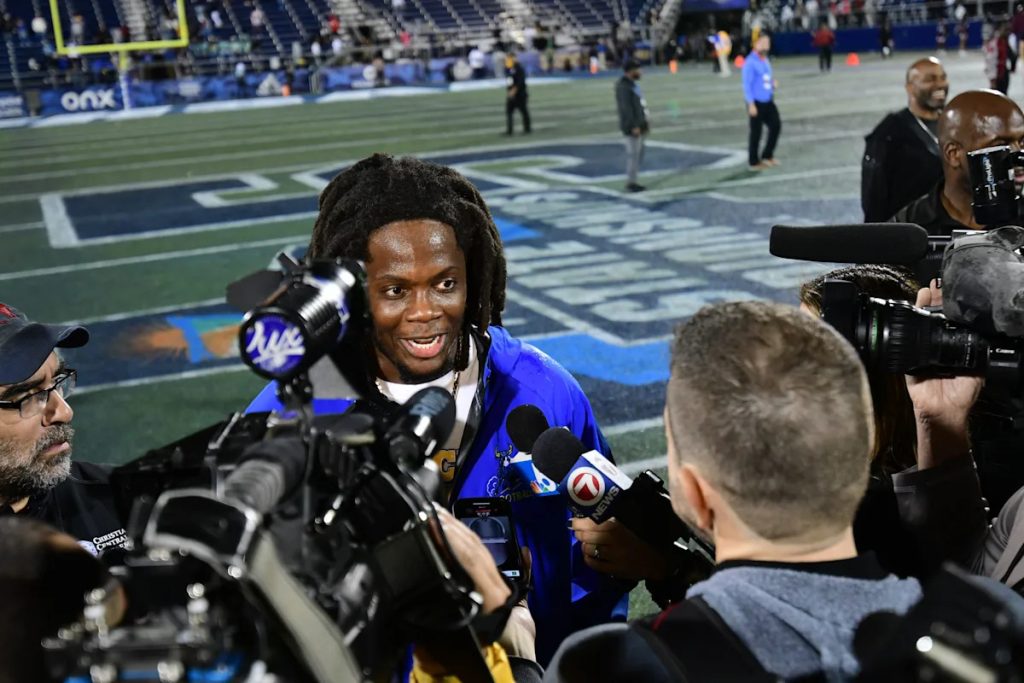
Last summer, the Teddy Bridgewater saga dominated the Florida and national high school sports conversation.
Bridgewater, the former NFL quarterback, led his alma mater – Miami Northwestern – to a state title in his first season on the sidelines. However, he was suspended by the school and later left for good after it was revealed he paid for the Uber rides of players –which counts as a “impermissible” benefit.
Advertisement
In an attempt to avoid a future situation like that, where the state’s brightest young coach needed to depart, the Florida State Legislature passed Senate Bill 178 – which was signed into law by Governor Ron DeSantis on May 22.
However, the law – as it was written – still made Bridgewater’s actions against FHSAA rules.
Tuesday, during its Board of Directors meeting, the Florida High School Athletic Association (FHSAA) offered clarity on the matter.
Here’s what to know:
What is in SB 178?
The law allows high school coaches to spend up to $15,000 of their own money on the welfare of student athletes.
Advertisement
Previously, coaches were forbidden from using any personal funds on student athletes, regardless of the situation.
Why would Teddy Bridgewater still technically be in violation?
Because the law states that funds can only be used for emergencies. FHSAA Executive Director Craig Damon told The Gainesville Sun after Tuesday’s meeting what could fall into that category.
“If I’m taking my team out to eat after a game, and we stopped at McDonald’s to get food, and I noticed one of my players is in the back because he doesn’t have any money, I’m not going to let that kid go hungry,” Damon said.

Miami Northwestern’s Teddy Bridgewater raises the state trophy following the team’s win over Raines in the Class 3A championship on Dec. 14, 2024.
It does not cover “recurring expenses,” though like the Uber rides Bridgewater paid for. Damon said the reason is because he doesn’t want coaches using those funds to pay for the Uber of a potential recruit.
Advertisement
“It was a recruiting loophole,” Damon said. “Coaches have said ‘Hey, you live 50 miles away. Don’t worry about it. We’ll get you to school.’ That’s not the intent of the law.”
Damon says Bridgewater’s behavior would be allowed
Because Bridgewater claimed he paid for the Ubers to prevent players from walking home through unsafe neighborhoods in Miami-Dade County, he could classify it as an “emergency” expense.
“There may be violence in a situation where a kid walked home, and they might have been in the middle of gunfire,” Damon said. “Now you provide transportation for that kid not to be in gunfire, that might be an emergency situation.”
Advertisement
In that case, a coach would just need to prove to the FHSAA that it was necessary for “student-welfare.”
Noah Ram covers Florida Gators athletics and Gainesville-area high school sports for The Gainesville Sun, GatorSports.com and the USA TODAY Network. Contact him at nram@usatodayco.com. Follow him on X @Noah_ram1 and on Instagram @Ramreporter.
This article originally appeared on The Gainesville Sun: FHSAA finalizes what expenses are allowed under the Teddy Bridgewater Act


Comments
Advertisement