
NEWYou can now listen to Fox News articles!
The next ten percent of military degradation now costs more than the first ninety, and that is the operational lesson of the past four years and the central problem facing modern military strategy.
The wars in Ukraine and Iran are depictions of a bygone era of high-intensity conflict, with immense casualties in the case of Russia and Ukraine, and simultaneously a rehearsal of the conflicts that will define the 21st century. Unmanned systems, data science at scale to enable information processing and targeting, distributed command and control, and cheap precision strike have demonstrable effects on the battlefield that portend an uncertain future, and cheaper lethal effects and available software pose the real possibility of a democratization of organized violence that implicates the expectations nation-states can carry when choosing to take a country to war.
The Russia-Ukraine war, more than four years on, is the deadliest interstate war in Europe since 1945, with Russian casualties exceeding one million killed and wounded and Ukrainian casualties running 250,000 to 300,000 by the same accounting. Europe will never be the same after this war, but the epochal shift has occurred on a battlefield that is relatively stable if measured by the front lines that divide Russian and Ukrainian forces. Russia controls roughly twenty percent of Ukraine, an area equivalent to Pennsylvania, and over the past twelve months gained a net total of 1,669 square miles, about 0.7 percent of Ukrainian territory. Given the scale of human loss, it would be entirely reasonable to expect a significantly greater exchange of territory, and instead the contact line has been roughly frozen for over two years even as the violence continues at an apocalyptic pace with no end in sight.
IRAN’S DRONE SWARMS CHALLENGE US AIR DEFENSES AS TROOPS IN MIDDLE EAST FACE RISING THREATS
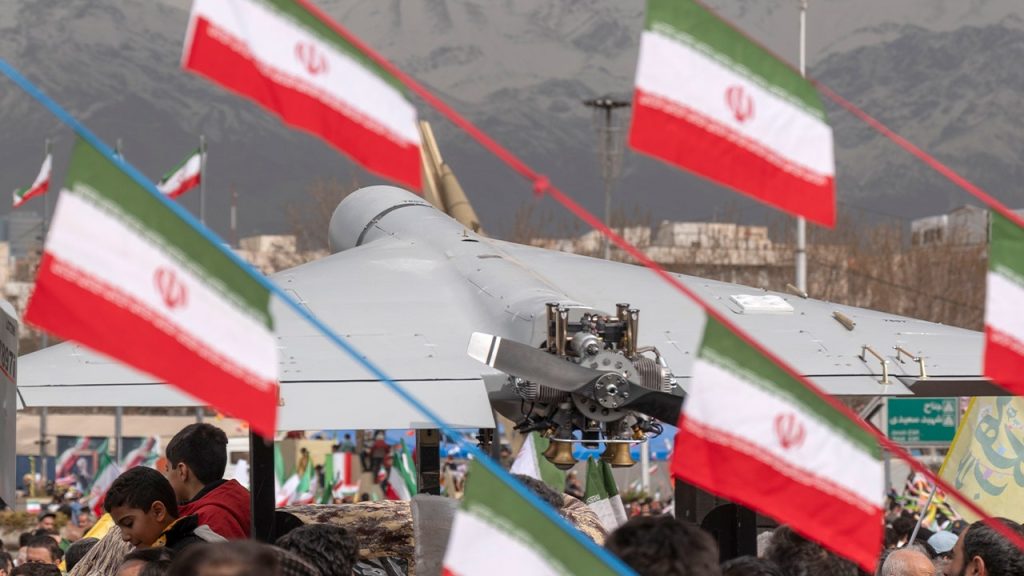
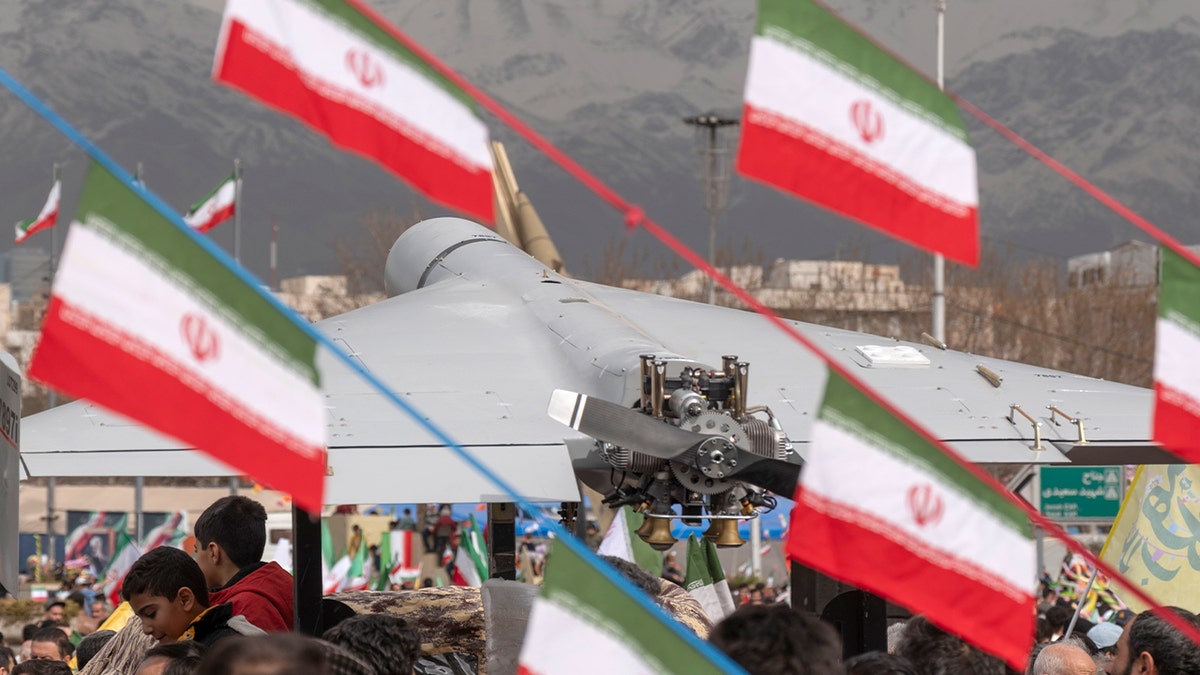
The Iran wars demonstrated the same dynamics on a compressed timeline, twice. In June 2025 the United States executed Operation Midnight Hammer, striking Fordow, Natanz, and Isfahan with fourteen GBU-57 Massive Ordnance Penetrators and roughly two dozen Tomahawk cruise missiles in twenty-five minutes, after which the Twelve-Day War ended within forty-eight hours. Eight months later, the United States and Israel launched Operation Epic Fury, nearly 900 strikes in twelve hours that killed Supreme Leader Ali Khamenei and decapitated the regime’s military leadership, while Iran answered with hundreds of ballistic missiles and thousands of one-way attack drones across the region. By April 1 the UAE alone had engaged 438 ballistic missiles, 2,012 drones, and 19 cruise missiles launched from Iran, and American losses totaled 13 service members killed and 381 wounded before the April 8 ceasefire, with Operation Project Freedom and the May 7 engagement near the Strait of Hormuz continuing the cycle. The Middle East political and economic paradigm is in turmoil, but it is striking that this took place without the military operations one might expect to accompany such dramatic shifts.
While the United States has indeed achieved massive degradation against Iranian military infrastructure across both operations, any further escalation would require an acceptance of a new phase of Iranian response, and the Trump administration’s reasonable reluctance at such a choice is a tacit acknowledgement that the next ten percent of degradation of Iran’s military would come at a heavier price than the previous ninety percent. A new Middle East paradigm is nonetheless here, and it comes amidst a bizarre stalemate even though the typical metrics of wartime battle damage assessments paint a clear picture of American superiority.
This is the Final Ten Percent, the structural condition under which conventionally superior militaries now operate, in which degradation of fixed infrastructure remains well within American means while coercion of a determined adversary toward a defined political outcome does not, and the cost curve consequently inverts.
The arithmetic of the new air war demonstrates the inversion. Iran’s Shahed-136 costs approximately twenty thousand to fifty thousand dollars per unit, while the Patriot PAC-3 interceptor that intercepts one costs over four million, THAAD interceptors run roughly fifteen million each, and a single Patriot battery costs about $1.5 billion. CENTCOM interceptor expenditure against Shaheds alone exceeded three billion dollars in the first six months of the Iran conflict, and although tactical interception rates approach ninety percent, the campaign-level cost ratio still favors the attacker because each Shahed that forces a Patriot launch fulfills its strategic purpose even when destroyed fifteen kilometers from its target.
RUSSIA’S WAR AGAINST UKRAINE ENTERS FIFTH YEAR AS EXPERTS OUTLINE 3 POSSIBLE OUTCOMES
Ukraine has demonstrated the converse, with Magura V5 maritime drones costing roughly $250,000 to $300,000 each having forced the withdrawal of the Russian Black Sea Fleet from Sevastopol to Novorossiysk and damaged or sunk approximately a third of that fleet, such that a military with no surface combatants achieved sea denial against the inheritor of the Soviet Black Sea Fleet at a capital cost that is a fraction of a percent of the value displaced.
If the world’s hegemon, in a coalition with one of the world’s most capable expeditionary militaries, can pursue war to accomplish political ends with such uncertain results, then it is worthwhile to wonder whether war will remain the same kind of political option that existed for millennia prior. Inferior militaries are clearly able to harness significant military effect in a way that was not possible before the digital age, and the question for conventionally powerful militaries is whether traditional notions of victory remain worth their dramatically increased costs.
The administration has already named the problem. The November 2025 National Security Strategy acknowledges that “the huge gap, demonstrated in recent conflicts, between low-cost drones and missiles versus the expensive systems required to defend against them has laid bare our need to change and adapt,” and that “America requires a national mobilization to innovate powerful defenses at low cost.” The same document establishes a Predisposition to Non-Interventionism as a foundational principle of American strategy and structures its Middle East section around the imperative to shift burdens and avoid forever wars. The diagnosis is correct and the doctrine is correct, though the political execution has now twice failed to honor either, since Midnight Hammer occurred before the NSS articulated restraint and Epic Fury occurred after.
BILLIONS SPENT, WARFIGHTERS WAIT: INSIDE THE PENTAGON’S BROKEN BUYING SYSTEM AND THE PLAN TO FIX IT
The implication for the United States is restraint coupled with reinvestment. Restraint is necessary because the Final Ten Percent renders further Middle East entanglement strategically irrational regardless of how satisfying the first ninety would feel, and the Iranian regime, having been historically degraded across Midnight Hammer and Epic Fury, presents a circumstance in which the United States should consolidate operational gains and return to the parameters of the National Security Strategy: defend the homeland, assert the Trump Corollary to the Monroe Doctrine in the Western Hemisphere, and deter China in the Indo-Pacific.
CLICK HERE FOR MORE FOX NEWS OPINION
Reinvestment is necessary because the cost curve has inverted while the American procurement portfolio has not, and although objections to this argument note correctly that drones do not hold ground, that the case for American artificial intelligence is broader than autonomous targeting, and that deterrence will continue to require both attritable mass and exquisite systems, those points reinforce rather than rebut the conclusion that the procurement portfolio must change.
CLICK HERE TO DOWNLOAD THE FOX NEWS APP
The Department of War still buys exquisite platforms at exquisite cost, and that is necessary, but it does not buy attritable mass at scale, does not buy the gun-based and directed-energy systems that engage Shaheds at hundreds of dollars per shot rather than millions, and does not buy interceptor drones at the two-to-five-thousand-dollar price point that Ukrainian manufacturers have demonstrated. The NSS calls for a national mobilization to close this gap, though it remains to be seen whether that call survives contact with the defense-industrial status quo, and the American posture in the Indo-Pacific, where the relevant adversary fields the world’s largest navy and the world’s deepest missile inventory, depends on the answer.
A world that reflects this thesis would not be a Pollyannaish manifestation of a Fukuyama-style end of history, and instability could increase while more people could die, since the future of armies squaring off on the battlefield is particularly uncertain when more of those armies will be composed of, and targets of, robots.
Comments
Advertisement