
NEED TO KNOW
- Tez, a pediatric nurse practitioner, wasn’t originally planning on watching The Pitt, a realistic medical procedural drama on Max
- However, she ultimately decided to give the show a shot — and was blown away
- Now, she talks to PEOPLE about what the show gets right and wrong about her profession
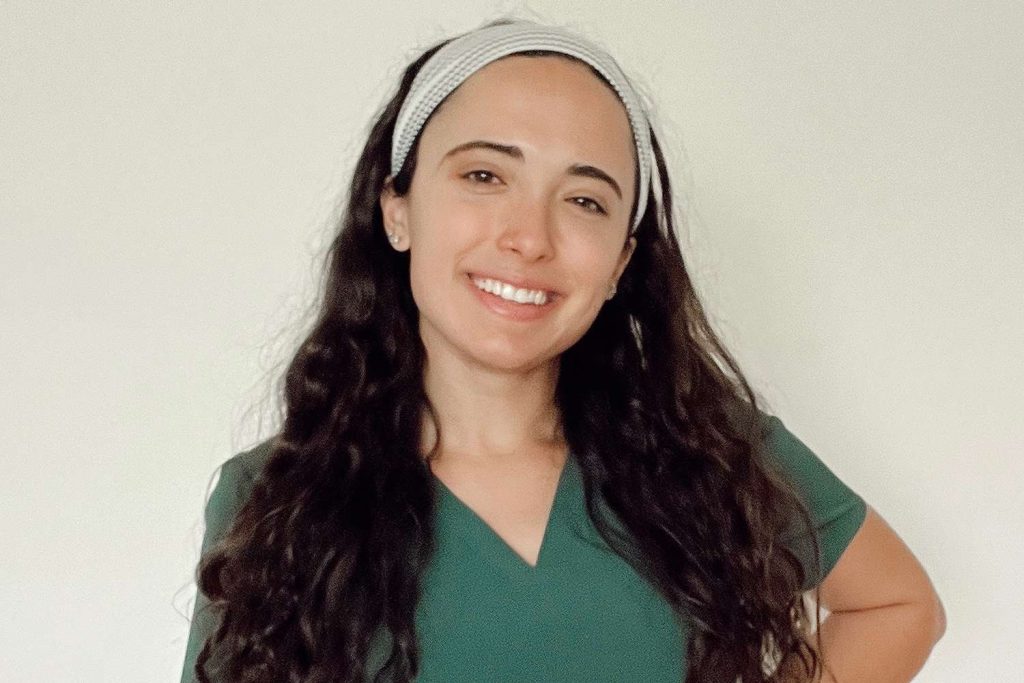
Tez is a pediatric nurse practitioner.
The 26-year-old works in an emergency room in the Washington, D.C. metropolitan area, a trauma center similar to the one in Max’s hit medical procedural drama, The Pitt.
On a typical day, she says, “You have your head on a swivel.”
“The ER is a lot different than a lot of other places in the hospital because you are discharging patients very consistently instead of having them for these longer periods of time and doing a lot of continuation of care,” Tez, who asked for her last name to be omitted, tells PEOPLE.
“It’s lots of emergent interventions and medications, working with your doctors, your mid-level providers, your pharmacists, your respiratory therapists to treat your patients,” she adds.
Warrick Page/Max
Depending on the day, Tez may or may not have time for a break, often relying on the sandwich cart or pizzas ordered by one of the doctors, as seen in The Pitt.
Tez says she wasn’t originally planning to watch the Emmy-winning series, as she likes to get a break from the stressful nature of healthcare in her downtime. However, one day, the show autoplayed after one of her series ended, and her ears perked up when she heard Dr. Michael “Robby” Robinavitch, played by Noah Wyle, describe the charge nurse, Dana Evans, played by Katherine LaNasa, as “the boss.”
“Any nurse, especially in an emergency room, will tell you a doctor who supports the nursing staff is everybody’s favorite doctor because it creates a very fluid working environment, and it makes your life easier as a nurse,” Tez says. “That was the first thing they got really well because you either had residents who didn’t really believe it or understand the role of the nurse and the charge nurse, or who learned very quickly. Or you had the ones like Dr. Robby who were like, ‘They’re our lifeline, rely on them for everything because that’s what they’re here for.’ ”
From that moment on, Tez says she could tell that The Pitt creators had done their homework, as the “jargon and the vernacular were very accurate.”
She was also surprised that the show included scenes about pressure from hospital administration regarding Press Ganey scores, which measure patient satisfaction.
“It’s something that, unless you work in an emergency room, you would absolutely never know,” she says. “When the hospital administrator comes down and says ‘the Press Ganey score,’ everybody who works in healthcare was probably triggered when they heard that.”
Tez was also impressed by how the show incorporated a social worker into the cast
“I consult social work all the time. If a patient says they need resources, such as help with housing or care, that’s the job,” she says. “I can’t recall a presence like that in a show in a while.”
Tez
Tez notes that The Pitt, which won the 2025 Primetime Emmy Award for Outstanding Drama Series, accurately shows the complexity of the ER and that it has its “own ecosystem.”
“We work together because you have to pull in other floors and places. That open communication the show provided for all different roles was super real because that is what we’re doing, and that is how we best function as an emergency room when we’re relying on each other,” she shares.
While Tez says the show is mostly true to her role, she was surprised that one thing was missing: respiratory therapy.
“If you work in the emergency room, it’s your instinct to consult respiratory therapy. Respiratory therapy is your best friend. I am very close with the respiratory therapists I work with,” she shares.
“I am not ashamed to call them if I have a patient who’s having a respiratory emergency,” she adds. “It’s everything to do with the lungs and breathing correctly. Respiratory therapy is there when you intubate, there for traumas, cardiac arrests, strokes, every single thing you could imagine, they are there.”
Warrick Page/Max
Tez notes that she was “bummed” they weren’t represented, but hopes they will be included in season 2, which Wyle recently confirmed.
Her only other critique is the presence of families during trauma emergencies, as she notes that families aren’t usually involved in surgeries or procedures, unless it’s a parent and a child.
Moving forward, she hopes the “cast and the writers and directors will be very aware and conscious of” her suggestions, and potentially “incorporate” them into the storyline, especially knowing how dedicated Wyle is to ensuring the show’s accuracy in medical details.
One of the reasons that Tez continued to watch the show was due to the portrayal of the COVID-19 pandemic. Tez was an EMT during the global outbreak and was part of the first response wave, compared to some of The Pitt characters who were part of the second response wave.
“If you worked during the pandemic, this was very real. Those flashbacks that Dr. Robby has were real for everyone. It felt apocalyptic, it felt very dystopian. It was brutal,” Tez shares. “It was something that bonded us; it bonded healthcare together in a really sick way because it had to.”
Tez
She credits the show for putting Dr. Robby’s experience with the pandemic at the forefront.
“It’s one of those things where you don’t often assume that the higher-ups and the people in control have these similar emotions. It’s very taboo,” she says. “That was especially powerful for him, as it reminded him that all levels of an interdisciplinary team experience those things and feel those emotions.”
The show touches upon the emotional and physical trauma of working during the COVID-19 pandemic, the weight of being care providers while also dealing with an increasing number of patients who distrust doctors and healthcare professionals.
“There’s such a mistrust in healthcare because of the pandemic. Half the patients we’ll see come in because they’ve Googled their symptoms and are hoping we can confirm their Google search was correct,” Tez shares. “We’re providing them with actual medical direction and say, ‘Hey, these scans and labs were negative. Let’s work to see what else it can be.’ Unfortunately, in the modern day, a lot of people don’t like to hear that.”
Warrick Page/Max
Aside from the depiction of the pandemic, Tez notes that there was one other moment in the show that stood out to her, as she says most shows have gotten it wrong up until now.
“When you have a patient suffering a cardiac emergency, there are certain heart rhythms. On the EKGs that you see, in every medical show, the big squiggly line that’s usually green that goes up and down, that’s the electrical activity within your heart,” she explains. “Day one of any cardiac class, you are taught not to shock. You don’t put the pads on and deliver electrical impulses to the patient’s heart when the patient has no pulse or asystole, that flat line on the screen.”
“I can’t remember who he was talking to, but Noah Wyle was talking to one of the professionals, and they went to prepare to shock the patient. He said, ‘No, you don’t shock asystole.’ I said, ‘Finally!'” she recalls. “My husband is a paramedic, and I showed him, and he said, ‘Wow, it only took 30 years of medical dramas to make sure somebody said that.’ ”
Never miss a story — sign up for PEOPLE’s free daily newsletter to stay up-to-date on the best of what PEOPLE has to offer, from celebrity news to compelling human interest stories.
It’s been rumored that season 2 will revolve around the Fourth of July, which Tez hopes will show the realities of working the holidays, as she’s done a few times now.
“It might be a very traumatic event, specifically a heavy season because of the nature of the weekend and the summertime because that’s typically when traumatic emergencies surge,” Tez says.
Overall, she believes the show is an excellent representation of her work, and it helps in conversations when people ask what she does.
“I’ve been encouraging all the people in my life who ask me, ‘What is it like working in an emergency room?’ to watch the show,” she says. “For example, my mom is very interested in what I do, so I said, ‘Mom, watch the show, it’s exactly what we do.’ ”
“The awareness that comes with the show has been really amazing for us healthcare workers,” she adds. “They all deserve all of the nominations and the awards. I never watched any of those award shows, and I was excited when I saw that it was winning, because I thought, ‘Thank God, finally.’ “


Comments
Advertisement