
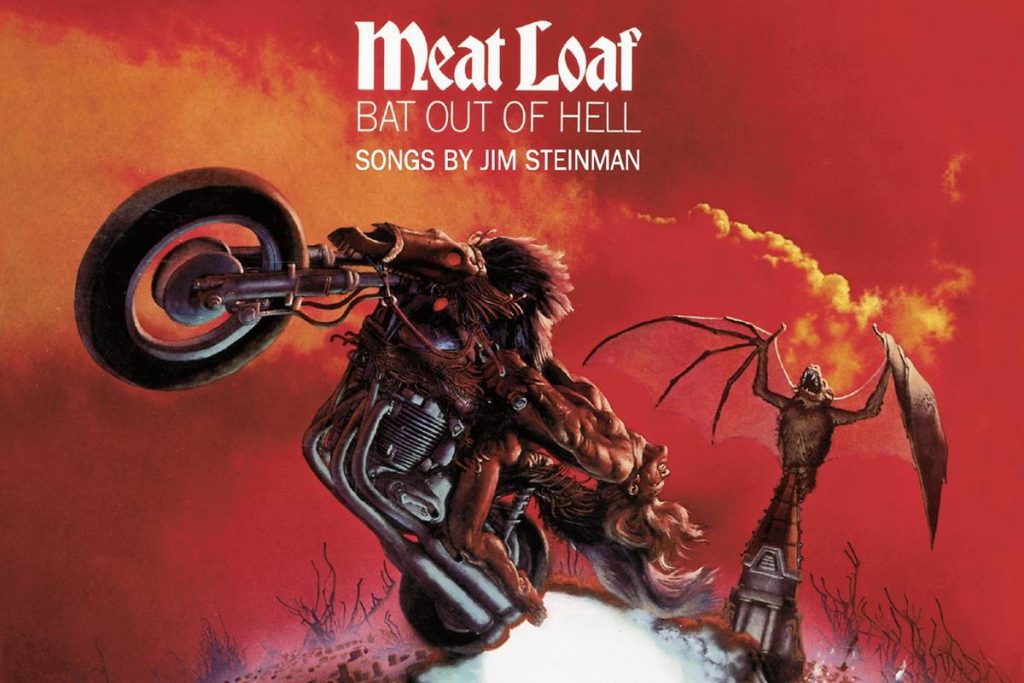
Meat Loaf’s Bat Out of Hell is regarded as a classic album today. But back in the ’70s, it was the project that almost no one wanted.
In the end, the singer and actor and his collaborator, composer Jim Steinman, the mastermind behind Bat, were lucky to connect with Steve Popovich of Cleveland International Records, and also, Todd Rundgren, who produced the album.
But as Rundgren shared with UCR, it was a long road before they even got to the point where they had finished music for someone like Popovich to hear and want to release. Though as he points out, the pair had certainly been working every room.
The Birth of ‘Bat Out of Hell’
“They were sort of grateful to have anyone at that point,” he explained. “They had shopped the music around to every producer. They actually did have a label [RCA Records] at that point, but they couldn’t find a producer who was willing to take on the concept.”
He heard the prospective material for Bat Out of Hell in an interesting fashion. They performed the bulk of the record, in Rundgren’s memory, with Steinman playing piano and two background singers adding additional heft to the performance, as Meat Loaf paced the room, “mopping his brow and singing this music.”
Suddenly, he got it — even if it wasn’t their vision, he saw an interesting path forward that helped him get behind Meat Loaf and Steinman.
‘This is a Spoof of Bruce Springsteen’
“I got into my head that this is a spoof of Bruce Springsteen,” he said. “I mean, it’s all the same kind of music. It’s all this retro ’50s motorcycles and switchblades, leather jackets and that sort of thing.”

“Bruce Springsteen had just been on the cover of Time Magazine, [the] savior of rock and roll. And I’m thinking, ‘Oh no, we’re going back to the ’50s,” he recalls. “So when I saw Meat Loaf, I thought, Springsteen needs to be spoofed and this is the guy to do it. That’s how I undertook the record. [But] I didn’t make a big deal out of that. They were just grateful to have somebody willing to take the project on and take it seriously.”
READ MORE: Revisiting Bruce Springsteen’s ‘Time’ and ‘Newsweek’ Covers
David Sonenberg, an attorney in the New York area, had taken on Meat Loaf, Steinman and Bat Out of Hell as his first management project. As the singer wrote in his 1999 memoir, To Hell and Back, Sonenberg ended up being a valuable ally.
They Needed Freedom to Do the Record They Wanted to Make
Both Rundgren and Meat Loaf indicated that there was trouble getting actual money flowing from RCA. In the producer’s telling, the label balked at the idea of enlisting members of the E Street Band to play on the material, baseball announcer Phil Rizzuto (who does the play-by-play on “Paradise by the Dashboard Light”) and other envisioned enhancements to the music. “You can’t hire a full orchestra for one song,” he remembered. “I essentially let them do whatever they wanted.”
Watch Meat Loaf’s ‘Paradise by the Dashboard Light’ Video
As Meat Loaf wrote, it was Sonenberg who helped to clear the path for them to have that total freedom. “[He] found this guy who owned a bunch of truck stops in New Jersey to put up $150,000 to buy out our contract with RCA and we were rolling again.”
“In the end, I wound up paying to make the record. I had Bearsville [the record label and recording studio owned by Bob Dylan’s early manager, Albert Grossman, who Rundgren worked with] put it on my tab,” he detailed. “When we’re done with the record, you get the first right of refusal on it.”
‘Bat Out of Hell’ Got ‘Turned Down by Everybody’
“Bearsville turned it down and so did Warner Brothers,” he said. “So it took them another six months to shop it before it ever saw the light of day.”
“Bat Out of Hell got turned down by everybody and their mother four times and the only person that has ever said that they were wrong and that they’d made a mistake by not signing us is Clive Davis,” Meat Loaf told UCR in 2016. “That’s the only person that has ever come up to me and said, ‘I made a mistake.'”
Steve Popovich Understood Their Vision
He saw the “magic” in the project. “Every major label passed on Bat Out of Hell before [his label] Cleveland International picked it up,” the late record executive said in a 2002 interview. “It was the day and age of the wimpy-looking, Peter Frampton-types. Then here comes Meat Loaf, this huge guy with an amazing voice.”
“I was just talking with someone two days ago about how A&R men used to have pianos in our offices, and I used as an example the time Meat Loaf and Jim Steinman came in. Steinman played the piano, Meat Loaf sang, and the walls came down,” producer Tom Werman said, laughing during a 2014 UCR conversation, recalling the pair’s audition for Epic.
Watch Meat Loaf’s ‘Bat Out of Hell’ Video
“I said, ‘Jesus, you’re incredible, but I don’t think we can do anything with you.’ I was complimentary, but it was pretty theatrical next to what we normally did,” he shared. “I don’t know if I was right or wrong, but Steve got very enthusiastic about things. Very. He picked it up and ran with it.”
READ MORE: The History of Steve Popovich and ‘Bat Out of Hell’
We now have the receipts and statistics to know how right Popovich was with his beliefs in the songs that were hitting his ears, as theatrical as they might have been. Because Meat Loaf and Steinman were doing something that sounded so different from everything else that was on the radio, they eventually hit the mark, even though that part of things would also take a while.
That’s where Popovich came in, working the phones tirelessly to make sure the right people who could play the songs and ultimately, sell records, heard the music from Bat Out of Hell. Meanwhile, Meat Loaf and his band would tour relentlessly as well, taking the music to the people, one night after another.
You know the songs now: “Paradise by the Dashboard Light,” “Two Out of Three Ain’t Bad,”You Took the Words Right Out of My Mouth (Hot Summer Night” and yes, “Bat Out of Hell.” Anthems, all of them.
Those eventual warhorse tracks have powered Bat Out of Hell to worldwide sales of more than 40 million records at last count.
Meat Loaf had made plenty of peace with his own journey by the time he died in 2022. He even made two more sequel albums. The second one, gave him another giant hit with “I’d Do Anything for Love (But I Won’t Do That).”
Watch Meat Loaf’s ‘I’d Do Anything for Love (But I Won’t Do That)’ Video
“It’s part of life,” he offered as a summary of the initial Bat Out of Hell experience, during a 2013 conversation with UCR. “You hear a story every day in an interview about the guy that opened Best Buy, what they did to start McDonald’s, what they did to start this, what they did to start that.”
“Listen, Springsteen, he lost all of his publishing on Born To Run — we’ve all got those stories,” he pointed out. “I’ve got nobody playing the fiddle for me, trust me. There’s no violins playing behind me. It was what it was and it is what it is, and I just keep going.”
He named off a laundry list of people who had worked hard on his behalf during that same interview, noting that Popovich, “his fingers bled [because] he worked so hard.” But then he got down to his main point.
“Any artist who will sit here and tell you they did it themselves is a flat out liar. There were so many people involved, I mean, I’m missing people on a local level, people that would go and beat down radio [to get them to play the songs] and stuff like that,” he explained. “You don’t do anything by yourself, ever.”

Meat Loaf Through the Years: Photo Gallery
The Bat Out of Hell singer led a unique life, as these photos attest.
Gallery Credit: UCR Staff


Comments
Advertisement