
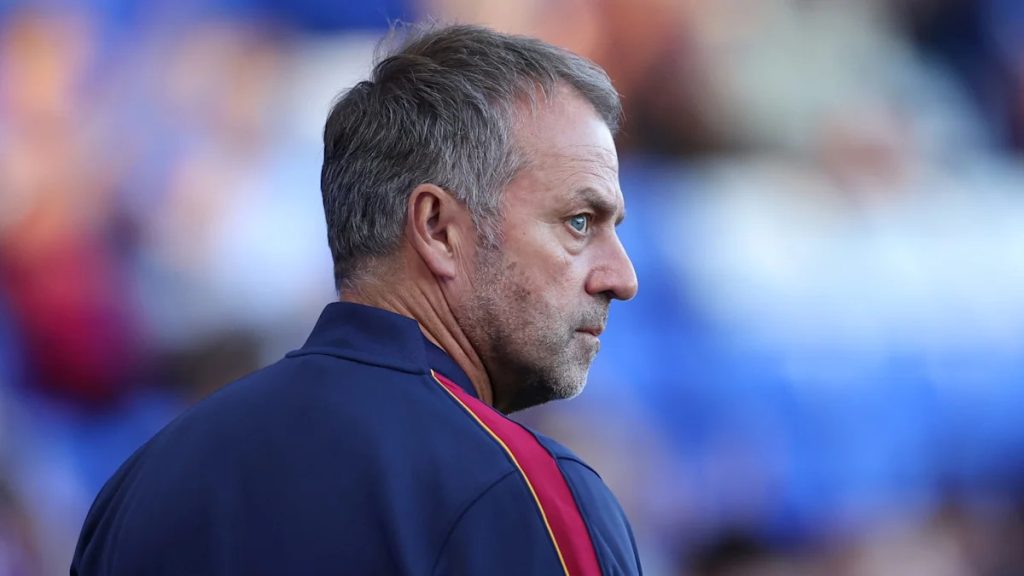
Hansi Flick’s approach to managing his Barcelona squad involves considerably more than selecting a starting XI and deciding when to make substitutions.
In fact, according to a detailed report from MARCA, the German manager combines performance data, medical assessments and direct conversations with his players before determining their workload, positions and involvement in the team.
Advertisement
The central principle behind his management is collaboration without, of course, surrendering his authority.
As per the outlet, Flick takes players’ opinions seriously, particularly those who regularly feature and accumulate significant minutes, but retains the final decision after consulting his coaching and medical staff.
Notably, all of this helps explain why some of his selection decisions can appear surprising, like Frenkie de Jong playing as a right-back against Atletico Madrid.
Flick treats player workload as an individual decision
MARCA affirms that rather than applying the same rotation policy to everyone, Flick considers the physical circumstances and preferences of individual footballers.
Advertisement
He discusses their playing time, whether their workload is becoming excessive and whether changes are necessary to reduce injury risks.

Flick considers several aspects before introducing any change. (Photo by David Ramos/Getty Images)
Understandably, this approach becomes even more relevant following the criticism surrounding Rodri’s injury after a demanding run of appearances.
Flick explained after the midfielder’s injury that managing the midfielder’s workload had involved direct discussions with the player.
“I’ve been in contact with Rodri, and we’ve managed his playing time together. I asked him, since he’s experienced, and we agreed,” he admitted.
Advertisement
Data and dressing room communication shape his decisions
Furthermore, the German manager and his staff regularly analyse physical information, assess injury risks and consider the demands of upcoming opponents.
Interestingly, his decisions are not determined by statistics alone, as player confidence, motivation, morale and personal preferences also influence discussions, particularly when he considers changing someone’s position.
His treatment of Lamine Yamal shows exactly how he strikes the balance between individual preferences and collective requirements.

The Barcelona manager has a specific plan of managing his players. (Photo by Alex Caparros/Getty Images)
Advertisement
The winger does not enjoy being left out of the starting XI, but Flick is prepared to rotate him, something he has already done this season, when his assessment of the circumstances demands it.
Positional changes explain another side of Flick’s management
The German’s willingness to reposition players follows the same philosophy.
Before introducing significant changes, he evaluates their characteristics, the team’s tactical requirements and the potential impact on dressing room dynamics.
He then discusses the possibility with the players and assesses their reactions before implementing his ideas.
Advertisement
Simply put, Flick’s method combines three important elements: preparation, communication and decision-making.
Indeed, players have a voice in how they are managed, but the final say is of the manager.


Comments
Advertisement