
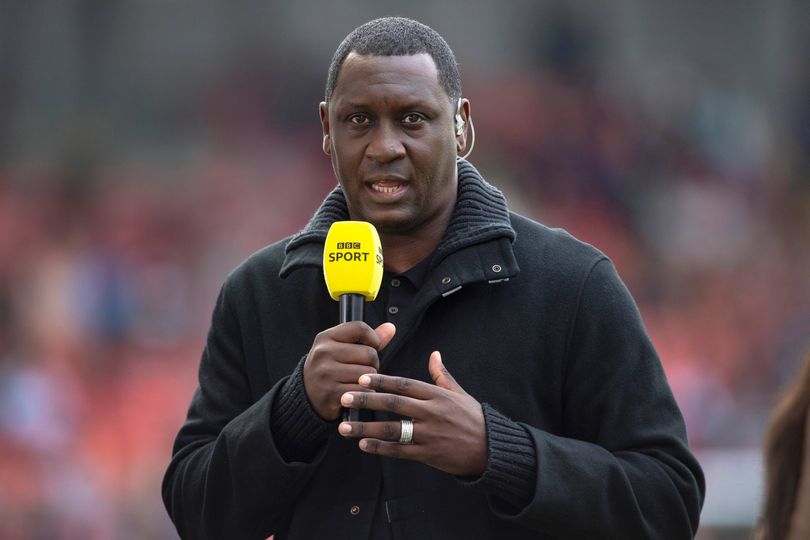
Former England striker Emile Heskey has admitted he is “not very keen” on FIFA’s hydration breaks, as a growing chorus of critics continues to lambaste the controversial stoppages in play.
Ahead of this summer’s World Cup, FIFA officials announced that hydration breaks would be introduced during each half to safeguard player welfare in the intense heat anticipated across the United States, Canada and Mexico.
Advertisement
Yet the mandatory 3-minute pauses have been implemented across all matches, even those contested in mild conditions or fully enclosed stadiums.
• FIFA hands Qatar player lengthy ban for leg-breaking tackle on Canada star
• Mauricio Pochettino admits to ‘naïvity’ when accepting USMNT role having underestimated challenge
Fans, players and pundits have made little effort to conceal their frustration with the hydration breaks, with England head coach Thomas Tuchel bemoaning that they are altering the “identity” of soccer.
Heskey echoed that sentiment, contending that two stoppages per game is excessive. “If I’m honest with you, I’m not very keen on them, especially in the first half,” he told Mirror U.S. Sports on behalf of OLBG.
Advertisement
“The second half, you could possibly say you need one – after that much time sweating, losing salts and so on, you can start cramping, so you’ve got to replenish that. But in the first half I don’t necessarily think you need it.”, reports the Mirror US.

The hydration breaks have proved controversial -Credit:DeFodi Images, DeFodi Images via Getty Images
Heskey also noted that on more than one occasion during this year’s World Cup, the hydration breaks have inadvertently contributed to momentum shifts.
On June 13, Morocco broke the deadlock against Brazil, who leveled the score just minutes after regrouping on the sideline before ultimately taking command of the match.
One day later, Curacao leveled the score at one apiece in the 21st minute of their contest against Germany, but the European powerhouse regained their composure following the first stoppage en route to netting six unanswered goals.

Curacao and Germany’s game leveled out after the hydration break -Credit:PAUL ELLIS, AFP via Getty Images
“As you saw – I can’t remember which game it was – the flow of the game just switched once they had the break,” Heskey said. “One team were in the ascendancy, and then suddenly their backs were against the wall.
Advertisement
“As a player you don’t want that, especially when you can smell a goal, and then all of a sudden you’re taking a break and the opposition can adjust their tactics accordingly.
“The reality is there’s only so much you can do from the sideline, once you get the players over to you, you can start adjusting, and that’s when things get done.”

The hydration breaks have been a controversial move by FIFA -Credit:Getty Images
Speaking to reporters ahead of England’s 0-0 draw with Ghana on Tuesday, Tuchel acknowledged that the hydration breaks have influenced games more significantly than he anticipated.
“I think that it interrupts and changes the identity of a football match much more than I thought,” he said.
Advertisement
“I had hydration breaks before when it was really, really hot and needed, but they were shorter. They were shorter and they were just in a few matches.
“In the interests of fairness here, it is now done in every match for every team. It breaks the match almost in four quarters. And I think it changes the characteristic of the match more than I thought.”


Comments
Advertisement