
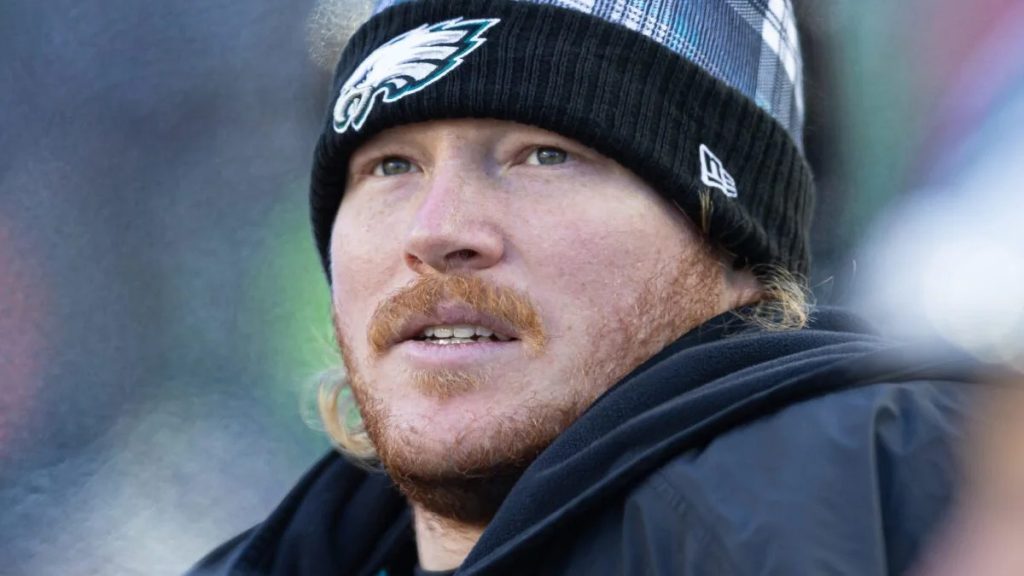
The Philadelphia Eagles made a major change to their offensive line when they traded Cam Jurgens to the Baltimore Ravens, however, the move does not appear to create a serious salary-cap problem for the team. The Eagles sent Jurgens and a 2027 seventh-round pick to the Ravens for a 2027 fifth-round selection and a 2028 second-rounder.
The Eagles also moved on from a player who had signed a four-year, $68M extension in April 2025, making the financial side of the deal worth watching. Still, the early reaction to the Eagles’ cap situation suggests they are not putting themselves in a difficult position by making the trade.
Advertisement
Cam Jurgens Trade Leaves Eagles With Room To Maneuver

Jan 5, 2025; Philadelphia, Pennsylvania, USA; Philadelphia Eagles center Cam Jurgens looks on during a game against the New York Giants at Lincoln Financial Field. Mandatory Credit: Bill Streicher-Imagn Images
Eliot Shorr-Parks addressed the salary-cap ramifications of the trade on October 8, arguing that the financial impact is much smaller than it may appear on paper.
That is important because the Eagles do take on dead money after moving Jurgens. The Eagles were already listed with roughly $10.7 million in 2026 cap space before the trade. So while moving Jurgens does not suddenly create a major chunk of additional room for spending, the Eagles should still have enough flexibility for the remainder of the season.
The bigger number comes in 2027. The Eagles are currently carrying a listed $14.9M dead-money charge tied to Jurgens, meaning part of his contract remains on the Eagles’ books even though he will be playing for Baltimore.
Advertisement
That sounds significant; however, it needs to be viewed alongside the Eagles’ broader cap outlook. Before accounting for the Jurgens move and other future changes, the Eagles were projected to have around $42.85 million in 2027 cap space and nearly $79.6 million in 2028, according to Over The Cap.
The Eagles are also getting something substantial in return for taking on that accounting hit. The 2028 second-round pick gives Howie Roseman another premium asset to work with, while the 2027 fifth-rounder adds another selection to a draft class that the Eagles have already reshaped through several trades. The Eagles can use those picks themselves or move them later if another roster opportunity emerges.
The timing of the move also matters. Philadelphia traded Jurgens shortly after Lane Johnson announced his retirement, leaving the offensive line in transition. Drew Kendall has stepped into the center role and now gets a clearer path to establish himself there.
For the Eagles, the trade is therefore less about creating immediate cap space and more about turning a changing offensive-line situation into future draft capital. There will be dead money; however, as Shorr-Parks pointed out, the Eagles have enough room beyond it that the cap hit should not overshadow what they gained in the trade.
Advertisement
Related reading:
Cowboys Receive Major Offensive Line Boost as $96 Million All-Pro Starter Is Cleared vs. Bucs
Massive Update Emerges on Dak Prescott’s Injury Scare Ahead of TNF
Skip Bayless Has Bold Take About Falcons RB Bijan Robinson
The post Could the Eagles’ Salary Cap Take a Hit From the Cam Jurgens Trade? appeared first on Gridiron Heroics.


Comments
Advertisement