
The best thing about a great trilogy is that it gets three chances to break a heart and somehow never wastes one. No middle chapter that feels like a detour, no final entry that leaves a viewer wishing the story had stopped earlier. Just three films that keep deepening the world they have made, until even a coal-strewn path or an empty dance floor starts to feel like a real place.
The six below are trilogies to hand over without a word. Some are funny in the way people get when they are afraid to be sincere, while others leave the room completely silent after the credits. Ranging from intimate black-and-white memories to a nine-hour march through war, each entry brings its own distinct weather and rhythm. They earn the rarest praise of all. Finish the last film, and the urge to restart is immediate. Allow me to give you near-perfect trilogies.
6
‘Doomed Bourgeois in Love’ (1990–1998)

The people in Whit Stillman’s Metropolitan, Barcelona, and The Last Days of Disco don’t storm out of a party so much as spend the ride home explaining why they were right to stay. They are young, polished, and faintly terrified that history has made them ridiculous. Tom Townsend (Edward Clements) wanders into Manhattan debutante culture, Barcelona sends talkative young Americans abroad, The Last Days of Disco follows Alice (Chloë Sevigny) and Charlotte (Kate Beckinsale) beneath a glittering ceiling, trying to look at ease while the music changes around them.
The pleasure is in the small humiliations, a tuxedo being adjusted, a dance floor watched from its edge, an insult delivered with perfect manners. Beneath the talk, the comedy has real tenderness for those who think too much because they feel too much. Class anxiety and romantic failure keep poking holes in their careful arguments. Unapologetically literary and tenderly funny, the trilogy feels like a time capsule from before everyone learned to perform their lives for a screen.
5
‘Bill Douglas’ (1972–1978)

Jamie (Stephen Archibald) scavenges for coal in a Scottish mining village, and the sound of his worn boots crossing the grit feels almost too loud for the silence around him. His half-brother Tommy (Hughie Restorick) also features in the trilogy, My Childhood, My Ain Folk, and My Way Home, which follows Jamie through poverty, bereavement, neglect, and the uneasy possibility of escape. Jamie rarely explains what he feels. You see it in his watchful eyes, his hunched shoulders, the way he occupies a cold room as if apologizing for taking up space.
Yet that quietness is precisely what ruins you. In stark black and white, a face can hold the whole weight of a family that has failed it. The films just lay the hardship out raw and let the silence sit until it hurts. Then, in the final chapter, the world opens a fraction through military service in Egypt and the pull of art. Unsparingly intimate, these three films feel less like a life retold than a piece of one carefully preserved.
4
‘Koker’ (1987–1994)

A boy wants to return his friend’s notebook. That is the small, urgent engine of Where Is the Friend’s House? It follows Ahmed (Babak Ahmadpour), who climbs and doubles back along the zigzag paths above Koker, asking after a door, a name, a child. The walk is so simple that you begin to feel every slope under his feet. Then Life, and Nothing More… returns to the region after the 1990 earthquake, and Through the Olive Trees follows a film crew and young Hossein (Hossein Rezai), who continues pursuing Tahereh (Tahereh Ladanian) despite her reluctance to return his affection. Fiction starts to brush against real lives without claiming to explain them.
That shifting boundary is the trilogy’s quiet astonishment. Damaged roads and ordinary conversations are treated with patience, never turning disaster into a backdrop for easy uplift. Dust clings. Everyone keeps moving, searching, rebuilding, and questioning. Somehow, that winding hillside holds everything these films have to say about distance, pursuit, and hope. Profoundly humane, these films make persistence feel like an everyday act of courage.
3
‘Trilogy of Silence’ (1984–1988)

In the Trilogy of Silence, Voyage to Cythera, The Beekeeper, and Landscape in the Mist all follow wanderers who keep moving because stopping would mean admitting how far they have been left behind. An exiled old communist named Spyros (Manos Katrakis) returns to Greece, another man named Spyros (Marcello Mastroianni) travels through the country as a beekeeper, and two children, Voula (Tania Palaiologou) and Alexandros (Michalis Zeke), set off toward Germany in search of a father who may be more hope than destination. The plots matter, but the landscapes stay with you, wet roads, empty ports, gray stations, a small figure crossing a field of fog.
Theo Angelopoulos gives those spaces time to breathe. His long takes make you feel the distance between strangers, and the slow walk through rain becomes its own kind of ache. These are not films that rush to console you. History hangs over every encounter, and the weather seems to know it. Yet the journeys keep drawing the eye forward. Mystically patient, the trilogy lodges in memory through its yearning for connection. A hand held out in the mist, a yellow coat against the gray, someone still waiting to be found. It hits and it stays.
2
‘BRD’ (1979–1982)

The “economic miracle” looks immaculate. Not here. Rainer Werner Fassbinder gets close enough to see the powder, the cigarette ash, and the exhausted smile. In The Marriage of Maria Braun, Lola, and Veronika Voss, three women navigate West Germany’s postwar boom, each finding a different price attached to survival. Maria (Hanna Schygulla) builds herself into a force. Lola (Barbara Sukowa) turns desire into a transaction. Veronika (Rosel Zech), once a star, drifts toward ruin. Their worlds gleam with cabaret light and polished surfaces, but every room feels like a deal being negotiated.
These women are fiercely alive, driven by sharp appetites and quiet desperation. You catch it in the forced smile, the twitch of a cigarette, the restless look toward a clock while a man talks. Romance and loyalty are never free of money or power. Ruthlessly funny, then suddenly heartbreaking, the trilogy uses melodrama’s sumptuous colors to expose a country trying to buy its way past its own history. In fact, all that shine only sharpens the damage. It sticks with you.
1
‘The Human Condition’ (1959–1961)

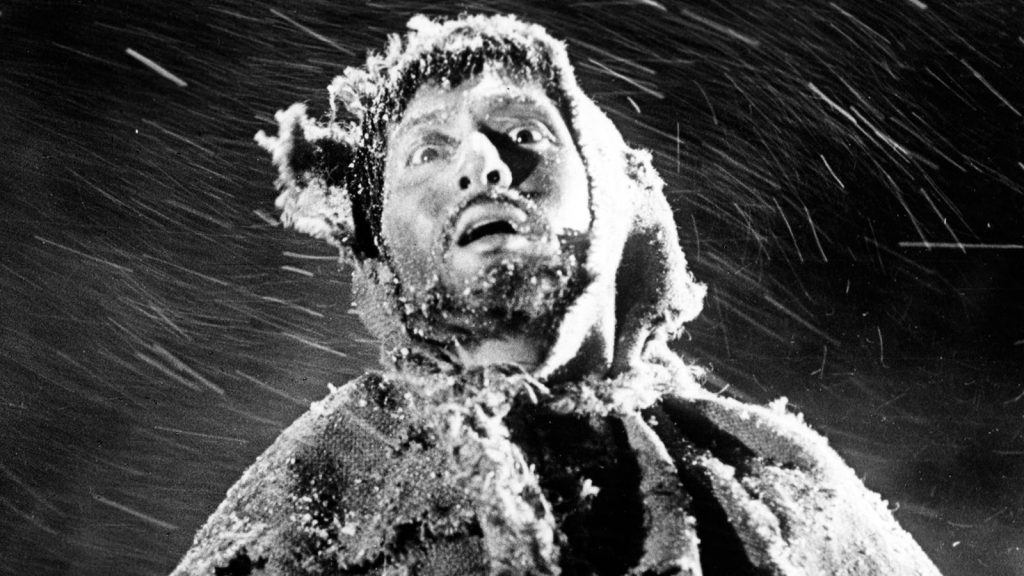
Kaji (Tatsuya Nakadai) believes humane treatment can survive inside a labor camp. That belief is the first thing the machinery of war tries to kill. Across The Human Condition trilogy, an idealistic pacifist is dragged from Manchurian mines into the Imperial Japanese Army, then toward Soviet captivity and a desperate march through winter. The scale is enormous, but the hurt stays close, a hollow face, frozen limbs dragging through snow, Michiko’s (Michiyo Aratama) love held in memory like a hand he might still reach.
This trilogy refuses the comfort of heroic war stories. Orders grind people down, the men who obey them are themselves afraid, hungry, and trapped. Black dirt and blood stain the white landscape, and every bootstep seems to cost Kaji something he cannot get back. The nine-hour journey asks you to sit with that cost. It demands it. Kaji carries the films through a transformation that grows more worn and more stubborn by the hour. Uncompromisingly humane, this trilogy turns endurance into a moral question, how much of yourself can you lose and still keep walking? You keep walking.




Comments
Advertisement