
The action genre is an exciting and evolving subsection of cinema that has continued to develop in exciting ways since the dawn of the medium. There’s no clear consensus on when the modern action film began because examples of high-wire setpieces and incredible stuntwork are much older than anything resembling modern blockbusters. The silent films of Buster Keaton and Charlie Chaplin featured remarkable precision and experimentation when it came to actual stuntwork, even if they wouldn’t technically be considered “action stars” by modern pundits. The Western genre, which has been an active part of the industry since the ‘30s, is also where a lot of “action stars” got their start; actors like John Wayne, Steve McQueen, Charlton Heston, Gary Cooper, and Yul Brennar were all accomplished dramatic actors who could do their own fight scenes.
Action cinema began to become more stylized in the 1960s, as the era of World War II adventure films started to sunset in favor of franchises like James Bond, which promised an increased degree of spectacle and theatricality upon each new entry. The ‘70s introduced a darker component to the genre with the rise of vigilante films like Rolling Thunder and the Dirty Harry series, which were more grounded in reality because they drew from contemporary anxieties.
The action genre is often defined by stars, as it seems as if each generation has a few major actors who continuously push the genre forward. Arnold Schwarzenegger and Sylvester Stallone dominated the ‘80s, and their reign continued well into the ‘90s, even if they found new competitors in Tom Cruise and Nicolas Cage. Although today there’s been action stars like Jason Statham and Gerard Butler who have essentially become genres on to themselves, there’s also an appeal in seeing older, more grizzled dramatic actors return to their pulpier roots, including Denzel Washington and Liam Neeson. There are still a few specific action films that have not only stood the test of time, but have a significant degree of influence on pretty much everything that has followed.
4
‘Raiders of the Lost Ark’ (1981)

Raiders of the Lost Ark was an attempt to do for ‘30s adventure serials what Star Wars had done for science fiction, and producer/creator George Lucas knew that there was only one person who he could trust with bringing the character to life. Steven Spielberg had long since lamented that he was unable to direct a 007 film, as MGM had consistently turned him down because they were not accepting American filmmakers. It was famously when Spielberg and Lucas were on vacation during the opening weekend of Star Wars that they came up with the idea of what the Indiana Jones franchise would look like. Unlike Bond, Indy was a straight-laced professor with a deep knowledge of history and archeology, but he also had a strong desire for justice. Although multiple possibilities were floated for who could possibly take on the role, Harrison Ford eventually became the only real choice, and it’s perhaps the defining part in a career that includes some of the most beloved films of all-time.
Raiders of the Lost Ark is a film that Lucas described as having “just the good parts,” and that is evident within a perfect screenplay by Lawrence Kasdan. There is no fat on the script, as the story moves at a propulsive pace without ever feeling impersonal. Although there are several great installments in the series, Raiders of the Lost Ark remains the best because it has the most exciting MacGuffin, which brings to mind issues of philosophy and faith that add an existentialist level to the film. Many of the action scenes, such as the truck chase and the bi-plane fight, are absolutely brutal in their viscerality, but Spielberg did not forget to also make a film that is equally funny and romantic. The romantic chemistry that Ford has with Karen Allen is nothing short of remarkable, and it’s a major reason why Marion Ravenwood is the love interest that the series has kept coming back to.
3
‘Die Hard’ (1988)

Die Hard is a film that has come to represent an entire era of action cinema because of its bullet-proof premise of an ordinary man trapped in a confined location and forced to use his wits and wry wisdom to defend himself and get people to safety. Die Hard was such a massive cultural success that the next generation of action films could all be pitched with their comparisons to Die Hard; Speed was “Die Hard on a bus,” Con Air was “Die Hard on a plane,” Under Siege was “Die Hard on a boat,” and The Rock was “Die Hard in Alcatraz.” What distinguished the original Die Hard from all of its imitators was the instantly iconic, brilliant performance by Bruce Willis as John McClane. Although at the time few thought that the guy from Moonlighting would be the next great action star, Willis understood the heart, humanity, and humor needed to play McClane, who somehow felt like a more relatable character than the types of roles that Schwarzenegger and Stallone were playing at the same time.
Die Hard’s genius was understanding that having a great villain was just as important as having a great villain, and cinematic antagonists rarely get better than Alan Rickman as Hans Gruber. Rickman had never acted in a film before, but became perfectly suited to be the cruel, sarcastic, and deviously clever criminal mastermind whose motivations aren’t exactly what they appear to be at first. The dynamic between Willis and Rickman is why Die Hard hits on another level, even if they don’t share that many scenes together. It’s also why none of the Die Hard sequels were able to quite live up to the promise of the first film; the best of the other films in the series is the third installment, Die Hard With A Vengeance, which honored Rickman by introducing Jeremy Irons to play his brother, Simon Gruber.
2
‘The Matrix’ (1999)

The Matrix came at a time in which the science fiction genre needed a boost of energy due to it being overrun by maximalist blockbusters and established franchises. The Wachowski sisters made a deeply philosophical warning about the rise of artificial intelligence that also drew from the philosophy of Plato and the type of martial-arts that was traditionally found in East Asian action cinema, as well as strong components of the cyberpunk aesthetic. The result was a groundbreaking achievement in worldbuilding and spectacle that both looked like something that cinephiles had never seen before and got them to question the nature of their reality. Due to the new rules for what its universe looked like, The Matrix was able to reinvent the way that fight scenes were choreographed in the digital age with cutting-edge techniques, such as the now-famous introduction of “bullet time.”
The Matrix is cutting edge as a work of slick, propulsive action filmmaking due to the inclusion of advanced and superhuman fight techniques within a tactical environment, but it is also a classic “hero’s journey” story that benefitted from the charisma of Keanu Reeves. Although Reeves had already proven himself to be a talented action star with Point Break and Speed, The Matrix perfectly cast him to play the avatar for humanity who has to accept his destiny to become “The One.” Although the later installments in The Matrix franchise got a little too wrapped up in their own mythology and strayed away from the emotional sincerity of the original premise, the first film remains a perfect masterpiece that has held up just as well today.
1
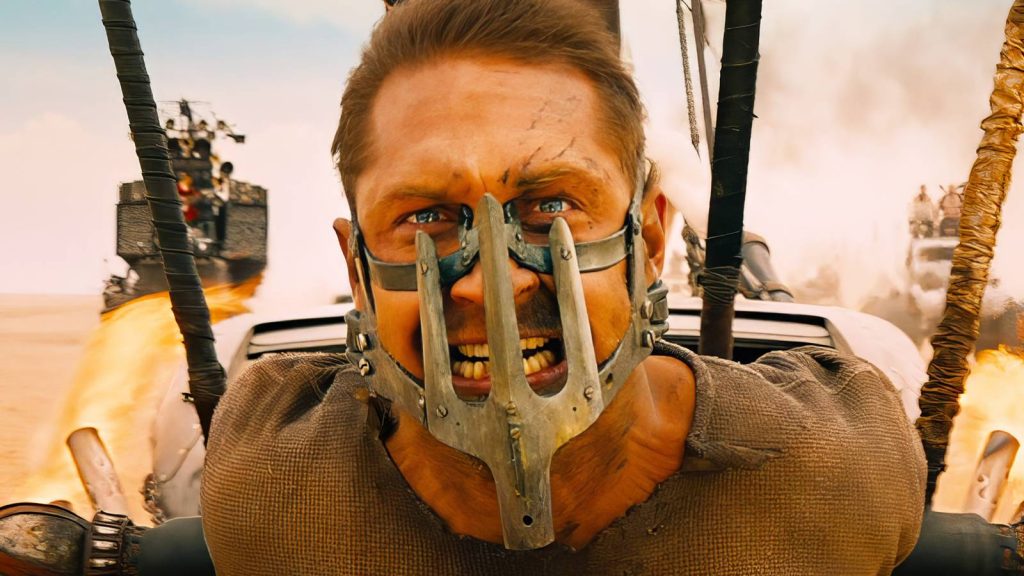
‘Mad Max: Fury Road’ (2015)

Mad Max: Fury Road was a film that came 30 years in the making, as George Miller had desired to make a fourth installment in the Mad Max franchise ever since he wrapped on the third entry, Mad Max Beyond Thunderdome, in 1985. Although a massive script was written that included an outline for the prequel film that he would end up making, Miller was constantly faced with setbacks and issues regarding funding; after 9/11 delayed shooting and Mel Gibson became too old to play the iconic titular character, it seemed like his dream would never come to fruition.
It was against all odds that Miller ventured into the Australian desert once more on a famously grueling film shoot in which wild rumors suggested that there was a massive disaster in place, and that skepticism didn’t let up until Mad Max: Fury Road debuted at the Cannes Film Festival in 2015 and solidified itself as one of the greatest films of the 21st century, regardless of genre. Mad Max: Fury Road is pure adrenaline and propulsiveness, as it is essentially one long chase. On a deeper level, Mad Max: Fury Road follows a drifter who gets caught up in a revolution, and the launching of Charlize Theron’s Furiosa as one of the defining action heroes of all-time took the great franchise to another level.



Comments
Advertisement