
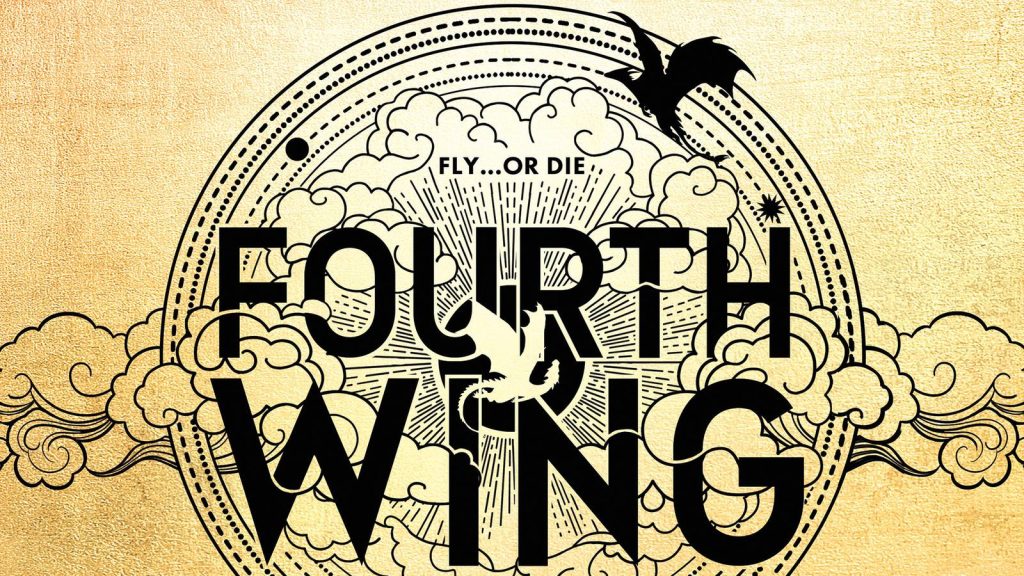
Fantasy novels have no shortage of magical schools, whether they’re training young wizards, aspiring warriors, or, in Fourth Wing, dragon riders. Rebecca Yarros‘ BookTok sensation won readers over with the story of Violet Sorrengail, the daughter of a high-ranking military leader who, ironically, doesn’t have a warrior’s bone in her body.
It’s a familiar fantasy trope: an underdog is sent to a school, discovers their hidden potential, and eventually realizes they’re part of something much bigger. While Fourth Wing certainly has its devoted fanbase, it’s far from the only fantasy novel to make magical education an exciting adventure. From the reluctant son of Poseidon to an orphan discovering her shamanic abilities, here are the fantasy books better than Fourth Wing.
‘The Poppy War’ (2018)

The Poppy War follows Fang “Rin” Runin, a young war orphan from a rural village in the south of Nikan who is raised as little more than a slave in her foster parents’ household. Desperate to escape an arranged marriage, Rin does the impossible: she studies day and night to pass the ultra-competitive Keju national exams and earn a place at Sinegard, the Nikara Empire’s elite military academy. But getting accepted is only half the struggle. Surrounded by more privileged peers, Rin must prove she deserves her place while learning to control her newfound powers before they consume her.
Fourth Wing draws heavily on the dragon-rider trope, which has become rather predictable in a predominantly Western fantasy genre. The Poppy War, meanwhile, takes clear inspiration from Chinese history, incorporating the imperial examination system, military hierarchy, and the historical significance of opium, which plays a central role in the story. More importantly, Rin is far from your typical fantasy heroine. Despite her intelligence and determination, she’s impulsive and often makes terrible decisions, driven by her need to prove others wrong. She has her own logic for justifying these actions, even when they lead to devastating consequences. Rather than presenting a straightforward underdog who rises above her circumstances, R. F. Kuang gives readers a protagonist whose thirst for power turns her into her own worst enemy.
‘The Atlas Six’ (2020)

Readers might think a school would be a place for learning, discovery, and enlightenment, but that’s hardly the case in The Atlas Six. While Fourth Wing trains future soldiers at Basgiath War College, The Atlas Six takes a much darker approach to education. At its center is the Alexandrian Society, a secretive group of elite magical scholars who guard knowledge lost to ancient civilizations. Think The Umbrella Academy, but with magic. Six chosen pupils, each with their own supernatural abilities, are invited to live together in a secluded London estate for a year to hone their craft. There’s just one problem: only five can become members of the Society, so one of them has to go.
As it turns out, the Alexandrian Society isn’t quite as noble as it sounds. With one candidate set to be eliminated, the selection process quickly turns into a psychological game where everyone is trying to outsmart, manipulate, and sabotage one another. Throughout the book, readers will find themselves wondering whether the Society actually wants these magicians to reach their full potential or simply sees them as pawns in its elitist intellectual game. Fourth Wing may prepare its students for actual warfare, but the battle in The Atlas Six is just as brutal. Only this time, the weapons are manipulation, secrets, and mind games.
‘A Deadly Education’ (2020)

Nobody is safe in A Deadly Education. Galadriel “El” Higgins is a half-Welsh, half-Indian sorceress attending the Scholomance, a magical school where students must survive murderous monsters before they can graduate. Unlike ordinary schools, there are no teachers, no holidays, and practically no safe places to hide. Already an outcast because of her unusually destructive magical abilities, El struggles to control her powers while enduring the school’s brutal social hierarchy. Surviving the Scholomance isn’t just about keeping the monsters away—it’s also about figuring out whom she can trust.
Both A Deadly Education and Fourth Wing revolve around students attending exceptionally dangerous magical institutions, but the Scholomance takes things to another level. Students must constantly watch their backs because monsters can pop up everywhere, from classrooms to ventilation systems. But the monsters aren’t the only problem. Naomi Novik also introduces a magical society where wealth and connections can make the difference between life and death. Students from wealthy enclaves have access to better resources and magical protection, while everyone else is left to fend for themselves. While Fourth Wing puts its students through a strict chain of command, A Deadly Education shows just how unfair the playing field can be when some students are practically set up to succeed while others are simply trying not to get eaten.
‘A Wizard of Earthsea’ (1968)

Before the Harry Potter series took over the globe, Ursula K. Le Guin‘s A Wizard of Earthsea laid the foundations for the scholarly wizard trope. But instead of battling demons terrorizing the school, its main character must defeat the biggest enemy of all: himself. This coming-of-age story follows Ged, a village boy who discovers he has a natural gift for magic. After studying under the mage Ogion, Ged grows impatient with his master’s lessons and eventually enrolls at the School of Roke. But his eagerness to prove himself soon gets him into trouble.
One of the book’s most interesting features is its magic system, which is rooted in the Old Speech. Knowing the true name of something gives a wizard power over it, but casting spells can also disrupt the natural balance of the world. Ged finds this out the hard way when he uses magic for superficial purposes, such as impressing his classmates by summoning a spirit, an act that brings lasting consequences throughout his spiritual journey. While Fourth Wing focuses on its seemingly fragile protagonist beating the odds, A Wizard of Earthsea takes readers through Ged’s mistakes as he learns not only to become a capable sorcerer but also a wiser one.
‘Percy Jackson & the Olympians’ Series (2005–2009)

Growing up with distant parents is never easy, but for Percy Jackson, the distance between them is on a whole other level. Rick Riordan‘s Percy Jackson & the Olympians series became a sensation by bringing Greek mythology into a modern-day setting, proving that ancient legends can remain relevant thousands of years later. Twelve-year-old Percy Jackson discovers that he’s the son of Poseidon, the Greek god of the sea. Unfortunately, being a demigod also puts him at risk of becoming a target for dangerous mythological creatures. Luckily, Camp Half-Blood offers a safe haven for kids like Percy, giving him a place to train, discover his abilities, and learn what it takes to become a hero.
The series features plenty of battles involving mythical creatures and Olympian gods, but much like Fourth Wing, it also explores the complicated relationships between its young protagonist and their parents. While Violet’s strained relationship with her military leader mother in Yarros’ novel is difficult enough, Percy has an absent father who’s literally one of the most powerful gods in Greek mythology. It’s hard enough dealing with an emotionally distant parent, but imagine having to confront one who can command the seas. Thankfully, Percy isn’t entirely helpless himself. His divine heritage gives him powers of his own, making him just on par with Poseidon.



Comments
Advertisement