
Plenty of trilogies run on a single continuous storyline that carries through from start to finish. Then there are the trios that keep looping back to the same central theme, location, or human struggle from entirely different angles. That second group hits differently because each entry works as a standalone piece while still retroactively reshaping how every character decision feels.
In fact, these six selections show just how far that thematic approach can stretch. The entries range from awkward Swedish salesmen trying to hawk plastic vampire teeth to a massive nine-and-a-half-hour epic about surviving war with your soul intact. Every single title here earns its keep without needing the surrounding films to lean on. Plot twist, together they hit harder.
6
‘The Living’ (2000–2014)

Roy Andersson’s The Living trilogy includes Songs from the Second Floor, You, the Living, and A Pigeon Sat on a Branch Reflecting on Existence. The trilogy has no continuing plot. Instead, it keeps returning to ordinary people facing humiliation, grief, and the daily effort to carry on.
In Songs, Kalle (Lars Nordh) burns down his failing business for insurance money, then tries selling wooden crosses at a trade fair. You gives a teacher breaking down in class while a military band plays. Pigeon follows Sam (Nils Westblom) and Jonathan (Holger Andersson), two salesmen who cannot sell their vampire teeth. Laughter quickly turns into discomfort as the camera holds on them after another failed pitch. Every carefully staged scene makes embarrassment feel painfully human. That’s the real genius here, because the trilogy forces viewers to pay closer attention to people having a terrible day.
5
‘Proletariat’ (1986–1990)

The Proletariat trilogy was never planned as a three-part project from the start. Instead, these three films gradually came together to form a raw portrait of working people trying to secure some tenderness and control over their lives. Shadows in Paradise pairs garbage collector Nikander (Matti Pellonpää) with supermarket cashier Ilona (Kati Outinen). Their romance keeps running into disappointments and awkward practical problems.
In Ariel, Taisto’s (Turo Pajala) father gives him a Cadillac, then kills himself. Taisto is robbed, jailed, escapes, and tries to leave Finland with Irmeli (Susanna Haavisto) and her son. The Match Factory Girl follows Iris (Kati Outinen) from a factory line to a home where her parents ignore her. After a date treats her as disposable, she buys rat poison. That turn is brutal, inspiring a protective feeling for Iris even as she commits terrible acts. Still, the signature deadpan humor never makes her humiliation the joke.
4
‘Bill Douglas’ (1972–1978)

Labeling Bill Douglas’s trilogy as merely bleak leaves out the heart of the story. My Childhood follows eight-year-old Jamie (Stephen Archibald) in a Scottish mining village, with his mother institutionalized and his father absent. His brother Tommy (Hughie Restorick) is one of the few people who shares his daily life.
In My Ain Folk, Jamie is sent to live with his paternal grandmother. His grandfather gives him affection, and losing him leaves Jamie with little comfort at home. My Way Home takes Jamie through foster care, a homeless shelter, and the RAF. In Egypt, he meets Robert (Joseph Blatchley), whose friendship gives him kindness without asking him to earn it first. Stephen Archibald lets viewers watch Jamie grow without making him a symbol of suffering. It feels infuriating that kindness took so long to find him. Yet the moment it does, the gratitude is overwhelming.
3
‘Koker’ (1987–1994)

Where Is the Friend’s House? gives Ahmad (Babak Ahmadpour) a simple, urgent problem. He has his classmate’s notebook, and the boy may be punished if Ahmad does not return it. Ahmad walks from village to village, asking for help. You are rooted for him the entire time. The notebook matters because he understands what the punishment will mean to his friend.
And Life Goes On sends a father and son through earthquake-damaged roads, searching for the child actors from the first film. Through the Olive Trees follows a crew making that second film, while actor Hossein (Hossein Rezai) keeps trying to court Tahereh (Tahereh Ladanian), who refuses him outside their scenes together. These aren’t plot sequels so much as films that keep revisiting a village and the people living there. It is amazing how much care goes into everything, from a massive natural disaster right down to two actors sitting in uncomfortable silence.
2
‘BRD’ (1979–1982)

Instead of a standard sequence of stories, BRD acts as a sharp portrait of female survival, showing three distinct bargains available to women in a society eager to prosper and forget. In The Marriage of Maria Braun, Maria (Hanna Schygulla) uses ambition and beauty to build security during the economic recovery after her husband disappears. Lola shifts the dynamic, following a cabaret singer-prostitute (Barbara Sukowa) who calculates every move, maneuvering around a corrupt contractor and a new building commissioner for money, property, and love. Sukowa’s confidence in the role is a total pleasure to watch.
Then Veronika Voss drops into complete obscurity, tracking a former Nazi-era film star (Rosel Zech) trapped by her need for help and dependent on a doctor, while sportswriter Robert Krohn (Hilmar Thate) looks into her decline. What stays with you is how differently these three films approach the exact same struggle. Maria negotiates, Lola calculates, and Veronika succumbs. Together, their choices expose the precise price tag postwar West Germany placed on getting ahead.
1
‘The Human Condition’ (1959–1961)

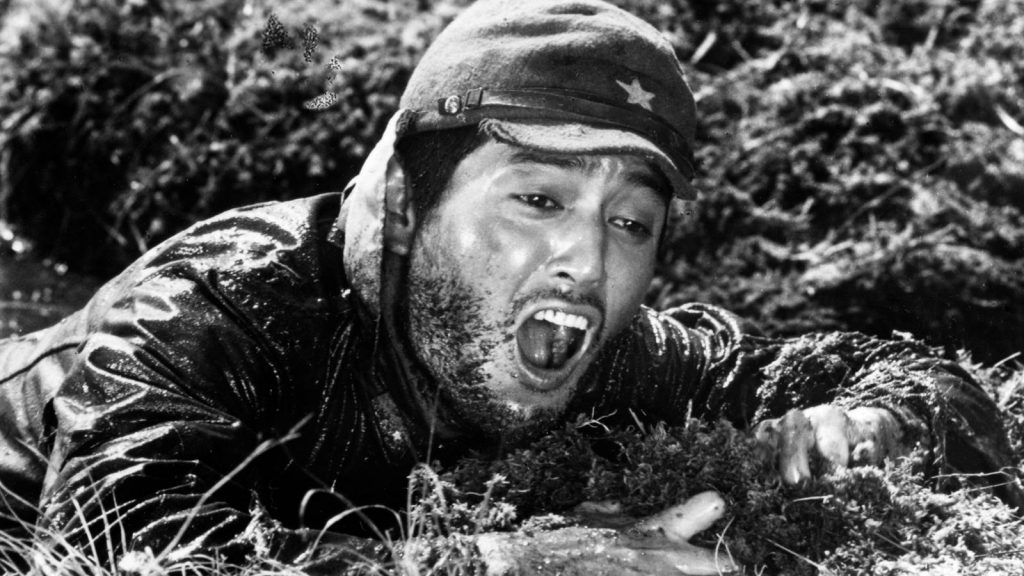
Across nine and a half grueling hours, this trilogy tracks a single man’s moral destruction as every attempt to act decently backfires. Kaji (Tatsuya Nakadai) starts in No Greater Love taking a job supervising forced Chinese labor in Manchuria to avoid conscription, trying to improve the workers’ conditions. That decency gets him beaten, costs him his exemption, and drags him directly into the Imperial Army. In Road to Eternity, the military’s relentless demand for obedience costs him people he respects.
By A Soldier’s Prayer, he is left a prisoner walking through snow toward his wife Michiko (Michiyo Aratama) until he dies. The tragedy is that Kaji’s best intentions constantly end up hurting the people he wants to protect. Kaji is never presented as flawless, which only makes his downward spiral feel more agonizing. Truth is, the desperate hope for him to just make it home haunts you long after the credits roll. It hits like a brick.




Comments
Advertisement