
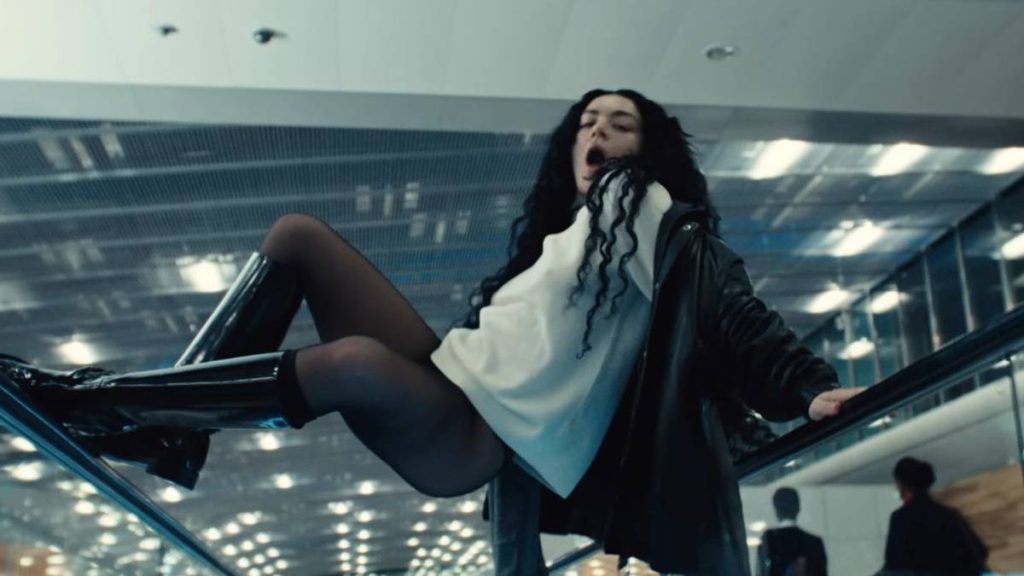
It’s no secret that pop music has undergone a massive renaissance. With the rise of acts like Tate McRae, Lorde, Chappell Roan, Charli XCX, Addison Rae, and many more, the ushering in of a new generation has breathed new life into the sonic landscape. So much so that rap and hip-hop has seen a massive decline in mainstream popularity, as there are currently no rap songs in the top 40 of the Billboard Hot 100 for the first time since 1990.
However, while pop music has seemingly been thriving under the dance pop umbrella, it seems the genre is take a new stylistic pivot. Charli XCX’s new single “House” for the 2026 film Wuthering Heights has elicited cultural chaos. While her record-shattering project Brat demanded sex and sweat while exploding on the club scene, “House” is a very drastic shift. It’s a haunting, baroque pop track that is heavy and sinister, setting the tone for Wuthering Heights’ entire soundtrack (which promises to feature several original Charli XCX songs) to be neoclassical dark wave.
The reaction has been polarizing, with many being shocked into distaste, while others deem it a genius choice artistically. Charli has been a lighthouse in the industry as of late, very much setting the cultural tone that has prompted other artists to follow suit. With superstar Rosalía’s classical album LUX also taking everything previously established about her sound and flipping it on its head, could pop music be heading towards a more avant-garde style?
The End of Dance Pop as We Know It

From ‘90s pop, to whisper pop, to indie pop, to soft pop, there are varying cloaks the genre has shape-shifted through. With different eras and different lead songstresses came distinct tonal shifts, from Britney Spears to Lady Gaga to Katy Perry. While in recent years it felt as if the genre had hit a lull, its descent into dance pop was a welcomed revival, and it’s undeniable that Brat set a precedent. It illuminated what audiences were craving, prompting every other artist to follow suit. From Troye Sivan to Adéla, every artist found a way to offer something sexually uninhibited and unifying in their own font.
Demi Lovato once held a funeral for pop music, vowing to never return to the genre after 2022’s HOLY FVCK drastic emo rock sound. Yet, come 2025, her newest offering, It’s Not That Deep, served as a kaleidoscopic dance-pop project. However, with the release of “House,” featuring spoken-word poetry by Velvet Underground co-founder John Cale, Charli XCX may have just put dance pop to rest industry-wide. Creating a neoclassical piece of art, she’s intentionally following her creative compass while unintentionally proclaiming a genre reset. Witchy and gothic, the turn is sharp because Charli trusts herself and the integrity of her authenticity. Brat summer was going to have to end at some point, and it seems that shocking the system was the only way to truly lay it to rest.
The Future of Avant-Garde Is Here
Her release coincides with Rosalía’s LUX, the Spanish singer’s follow-up project to 2022’s highly successful Motomami. While she had established an experimental, alt pop meets reggaeton niche, LUX is nowhere near anything anyone expected. It’s sung in 14 different languages and finds itself patching together pieces of gospel, avant-classical, and orchestral pop. It shocked audiences who had expected what they’d always gotten from Rosalia, though many have ultimately found it to be a profound work of art, channeling her ancestors through sonic catharsis. “Charli exploring darkness and Rosalía exploring the light, both while doing completely genre shifts… linked souls,” shared user @DreisVanNope via X, noting the overlap in both artists’ journeys.
The musical shift comes at a time in which there is much to be said and felt. While dance pop offered an escape from a burdening existence, the weight of pop learning baroque offers a more poetic lens for coping. Lux is a deep dive into feminine mystique, inner transformation, and spirituality, while “House” offers a claustrophobic encapsulation of being held prisoner within yourself. The hope is that should most artists follow suit and explore the shift in storytelling within their own art, they let themselves be raw and bleeding. That they discard the formula and allow themselves to release a deeper animal. The only way this change of pace in pop will work is if the utter humanity of it all is protected and held sacred.
Comments
Advertisement