
Before teaching at the titular school as Gregory Eddie on Abbott Elementary, arguably the most popular and acclaimed network sitcom on television today, Tyler James Williams was given the daunting task of playing a young Chris Rock in the Brooklyn neighborhood of Bedford-Stuyvesant. Williams first broke out on the cult UPN/CW sitcom, Everybody Hates Chris, a loose, fictionalized portrayal of Chris Rock’s childhood and adolescence on his way to becoming one of America’s preeminent stand-up comedians. Rock created and executive-produced the series alongside Ali LeRoi.
The series, which ran for 4 seasons and 88 episodes from 2005 to 2009, has only grown in estimation for people who watched it as kids and teenagers, and it is now streamable for free on Tubi. While it may have been geared toward a younger audience, Everybody Hates Chris‘ sharp wit, slick formalist tricks, and unflinching treatment of class struggles and racism satisfy an older audience that directly channels Rock’s comedic stylings on stage.
Chris Rock Chronicled His Youth in ‘Everybody Hates Chris’

Born in 1965, Chris Rock’s childhood memories would primarily take place in the 1970s. However, the series chronicling his turbulent and formative coming-of-age is set in the 1980s, separating itself from the litany of ’70s pastiche settings seen on television. Everybody Hates Chris, marked by its ironic, tongue-in-cheek humor and unreliable narration by Rock himself, skews the facts of his life to suit a sitcom, the most notable alteration being that Rock’s six siblings were condensed to just two on the show.
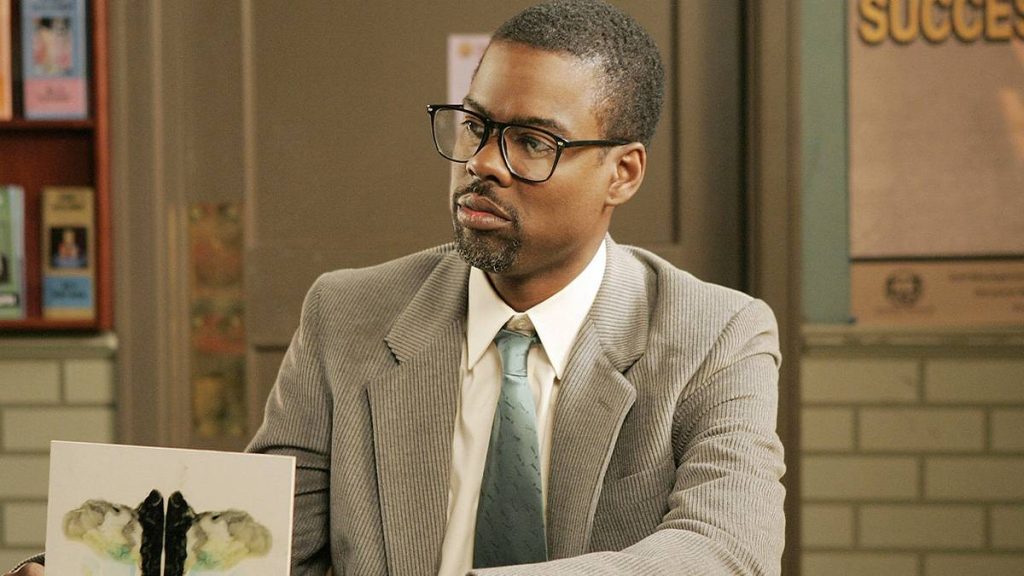
This rollicking single-camera sitcom follows Chris, whose tumultuous upbringing has him believing the world truly does hate him, as he deals with the everyday mania of his family, led by his overworked but supportive father, Julius (Terry Crews), and his temperamental and hostile mother, Rochelle (Tichina Arnold). His younger brother, Drew (Tequan Richmond), is blessed with the good looks and good fortune he is bereft of, and his sister, Tonya (Imani Hakim), is the spoiled youngest sibling who is always starting trouble. While he takes solace with his closest friend, Greg (Vincent Martella), Chris’ trials and tribulations at his predominantly-white school, where he faces bigotry, aren’t much easier. The series featured an impressive array of guest stars, such as Jimmie Walker, Wayne Brady, Loretta Devine, J.B. Smoove, Jason Alexander, Rock’s real-life brother Tony Rock, and Rock himself as a guidance counselor.
‘Everybody Hates Chris’ Is a Masterful Take on the Sitcom Genre
Having just concluded while on air, Malcolm in the Middle looms large over Everybody Hates Chris, even more than the sitcom its title is riffing on, Everybody Loves Raymond. Both shows are single-camera sitcoms about dysfunctional families with adult sensibilities despite being kid-oriented. Defined by absurdist humor and virtuosic visual language, they attempted to elevate the medium and delve into genuinely cynical territory that made childhood look like hell. Chris may not have been the middle child, but he carried the same feeling of alienation from the world as Frankie Muniz‘s titular character. On top of that, both of the show’s subject families’ names are never explicitly revealed, even if it’s understood that Chris‘ characters bear the Rock surname.
The show’s title is not just a cute inversion of the long-running multi-camera sitcom starring Ray Romano. Released during the boom of the “anti-sitcom”, shows like Arrested Development and It’s Always Sunny in Philadelphia that reject the sentimental cloying of network sitcoms, Everybody Hates Chris features the black humor and biting observational commentary of Chris Rock’s electrifying stand-up sets. Although everyone is well-meaning, with Julius’ extremely frugal tendencies and emphasis on work ethic being a reflection of their impoverished lives, the Rocks are anything but a happy family. Rochelle’s volatile disposition provides some of the show’s most hilarious moments, but they stem from the harsh discipline required for children who reside in an unforgiving neighborhood.
Each episode, primarily concluding with Chris having the rug pulled out from under him or facing an unwelcome interaction, signs off with a choir singing “Everybody Hates Chris,” a warm reminder that the world seemingly has a mission to punish its titular character in every walk of life. He is well-behaved and responsible, but no one seems to notice or care. His intelligence and curiosity hardly land him any other friends besides Greg, or especially any romantic interests, but his easy-going and care-free brother, Drew, has a parade of fanatics following him.
‘Everybody Hates Chris’ Has a Hidden Sentimentality and Wholesomeness

Aspiring to give her son safety and proper teaching, Rochelle enrolled Chris at Corleone Junior High (a funny homage to The Godfather) in an Italian-American neighborhood, but he instead received an education in systemic racism, from the hateful bullies to the white guilt-riddled teachers. Chris’ exposure to the perils of his neighborhood, from crime to economic distress, however, built a callus, and it shaped Rock’s irreverent but honest comedy style that frequently tackled issues of racism. The array of zany characters, including Bed-Stuy’s inhabitants, like the womanizing funeral director Mr. Omar (Ernest Lee Thomas) and the corner kid, Jerome (Kevontay Jackson), who always asks Chris to “hold a dollar,” poke fun at Rock’s upbringing while still admiring the infectious personality of the milieu.
Everybody Hates Chris never overtly taught its viewers wholesome lessons, but it possesses beneficial educational value for young audiences who feel disillusioned and frustrated by the precarious nature of life. While only a fraction of viewers could relate to his unavoidable discrimination at school, Chris speaks to the banal absurdity of early adolescence, where people and things are cruel for no reason, and you’re hardly rewarded for hard work and decent values. Still, the show never veers into nihilistic territory, as it gradually unveils the humane side of the most vicious and unscrupulous characters, notably Chris’ antagonistic bully, Joey (Travis T. Flory). Through the most unorthodox and questionable means, like Chris’ teacher, Ms. Morello (Jacqueline Mazarella), who fetishizes Black culture, most adult figures impart valuable lessons on to him for his short-term and long-term wellbeing.
Everybody Hates Chris‘ legacy speaks for itself, with the show reaching such high popularity that it received an animated spin-off in 2024, Everybody Still Hates Chris, featuring many cast members reprising their roles in voice form. Chris Rock’s dramatic account of his upbringing may have been cashing in on specific sitcom trends of the period, but the show informed contemporary comedic sensibilities, especially adult animated shows like BoJack Horseman. The world may have hated young Chris Rock, but the comedian channeled that hatred for a creative persona that we all love.

- Release Date
-
2005 – 2009-00-00
- Directors
-
Jerry Levine, Debbie Allen, Keith Truesdell, Ken Whittingham
Comments
Advertisement